.nz Rules
Version 3.2 came into effect on 17 March 2026.
Table of contents
2. Registration of a .nz domain name
3. Changing the Domain Name Holder
5. Cancelling a .nz domain name
6. Additional features of .nz domain names
8. Roles, responsibilities and obligations
11. Authorisation of Registrars
12. Complaints and enforcement
- Schedule 1 - Policy Development Process
- Schedule 2 - .nz Dispute Resolution Scheme
- Schedule 3 - Conflicted Name Process
Introduction
Context
InternetNZ holds the delegation for the .nz country code top level domain. It operates the regional registry for New Zealand (the .nz Register). The .nz Register is a single register, shared registry system that manages the registration of .nz domain names and associated data.
The guiding basis for the management of country code top level domains, including .nz, is set out in RFC 1591. Using RFC 1591, the Internet Corporation for Assigned Names and Numbers (ICANN), as the Internet Assigned Numbers Authority (IANA) Operator, is responsible for processes supporting global DNS related functions, including the delegation of country code top level domains.
Consistent with RFC 1591, there is no concept of ‘ownership’ involved in holding the delegation for .nz. InternetNZ serves at the pleasure of the local Internet community. It regards this role as one that must be done with the trust and on behalf of that community.
These .nz Rules have been made by InternetNZ in consultation with the local Internet community.
The main participants in .nz
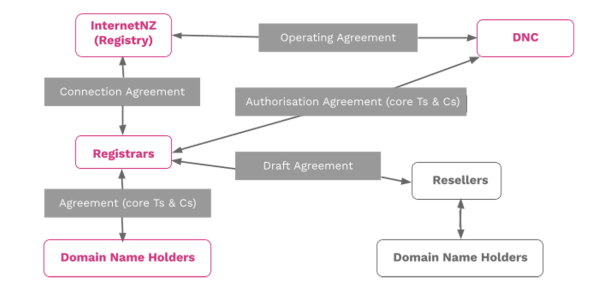
Figure 1. visual flowchart of contractual agreements between parties as described below
InternetNZ
InternetNZ is responsible for:
a. the overall operation of .nz
b. the long-term strategy for .nz, which binds InternetNZ and DNC
c. maintaining and developing these .nz Rules
d. the operation of the .nz Register and .nz Authoritative DNS consistent with agreed and publicly available service level commitments
e. billing relationships with Registrars
f. setting the annual fee Registrars must pay for a .nz domain name, in consultation with DNC
g. intellectual property rights in the .nz Register
h. being the lead representative in the Internet Governance system (e.g. ICANN, APTLD) in collaboration with DNC
i. the development of products for .nz.
DNC
The Domain Name Commission Limited (DNC) is a subsidiary of InternetNZ. Through the DNC Operating Agreement InternetNZ has appointed (DNC) to manage aspects of .nz on behalf of InternetNZ. Ultimate responsibility for .nz remains with InternetNZ.
DNC’s role, responsibilities and obligations are detailed in clauses 8 (Roles, responsibilities and obligations) and clause 12 (Complaints and enforcement). DNC acts independently of, and is not responsible to, InternetNZ for the performance of its functions and responsibilities.
DNC also:
a. monitors and publicly reports on the markets that operate in .nz
b. reports to InternetNZ on its corporate performance, and on its responsibilities as set out in these .nz Rules and in the DNC Operating Agreement.
DNC can only intervene in the relationship between Domain Name Holders and Registrars or between Registrars and InternetNZ in accordance with these .nz Rules and associated agreements and contracts.
Domain Name Commissioner
The Domain Name Commissioner (the Commissioner) is the most senior staff member in the Domain Name Commission. The Commissioner in undertaking compliance and dispute resolution functions acts independently of InternetNZ.
InternetNZ and DNC
InternetNZ and DNC are jointly responsible for:
a. developing a strategic view of .nz
b. maintaining the security, stability and resilience of .nz
c. publishing information about .nz
d. promoting .nz in the public interest.
InternetNZ holds DNC to account for its performance of its responsibilities through:
a. InternetNZ's ownership interest in DNC
b. the InternetNZ Chief Executive chairing DNC’s Board
c. the shared strategy and budget planning process.
Registrars
Registrars manage .nz domain names on behalf of Domain Name Holders by communicating with InternetNZ and managing information on the .nz Register. They are authorised to operate in .nz by DNC.
Domain Name Holders
Domain Name Holders are persons InternetNZ has licensed to hold a .nz domain name. Domain Name Holders must choose a Registrar to manage their .nz domain name on their behalf.
Moderators
Moderators apply a Moderation Policy to determine who can be a Domain Name Holder of a .nz domain name in one of the Moderated Domains (see clause 9). For example, the Moderator appointed by the New Zealand Government determines who is able to use the Moderated Domain .govt.nz to register a third level domain name like education.govt.nz. Moderators also ensure that all .nz domain names in the Moderated Domain comply with the Moderation Policy.
Resellers
Resellers provide domain name registration services but are not a Registrar authorised under clause 11 (Authorisation of Registrars). They buy .nz domain names and manage domain name records for Domain Name Holders through an authorised Registrar (e.g., a person registering a .nz domain name on behalf of another person or an IT company that has been given direct access to a Registrar’s services through an API). Resellers are often the intermediary between the end user (the Domain Name Holder) and the Registrar and sometimes provide value-added services like website creation or hosting.
See clause 8 (Roles, responsibilities and obligations) for more details on the roles, responsibilities and obligations of the main participants in .nz.
How these .nz Rules are organised
This document brings together the rules that bind all participants in .nz (the part of the Internet whose domain names end in '.nz'). These rules apply to all users of .nz domains, including Registrars and Domain Name Holders. They are comprised of:
- .nz Principles
- Policies
- Operational Rules
- Procedures and requirements.
.nz Principles
These set out the basis on which all activity related to the registration and use of .nz domain names should be judged. They will be the key factor in determining whether .nz is operating as the community intends. They will help InternetNZ consider what Policies, Operational Rules and Procedures & Requirements .nz should have, how they should operate and whether they should be modified.
Policies
These are based on the .nz Principles and set out the course of action to be taken by InternetNZ and DNC in determining what the Operational Rules and Procedures & Requirements should be. They will also guide InternetNZ and DNC in performing their respective registry and regulator functions.
Operational Rules
These provide detailed rules about how .nz operates. They set out:
- how .nz domain names are registered, renewed, assigned and cancelled
- additional features that can be applied to .nz domain names
- the terms of .nz domain names and how they are renewed
- the obligations of participants in .nz
- how moderated .nz domains are operated
- how people can search the .nz Register
- how entities are authorised to be Registrars in .nz
- how the .nz Rules are enforced and how disputes between participants are investigated and managed.
Procedures and requirements
These detail the procedural requirements and minor or technical requirements of .nz or the domain name system.
Conflict
The differing parts of the .nz Rules should be read wherever possible so they are consistent. If this is not possible and there is an apparent inconsistency between:
- the .nz Principles
- the Policies
- the Operational Rules
- the Procedures & Requirements
then the .nz Rules should be interpreted to give the .nz Principles the highest priority, followed by the Policies, then the Operational Rules and lastly the Procedures & Requirements.
Modification
Changes to these .nz Rules can be made in accordance with the Policy Development Process in Schedule 1.
Important agreements
Authorisation Agreement: In addition to the .nz Rules, the governing agreement between DNC and the Registrar is the Authorisation Agreement. All Registrars are required to enter into an Authorisation Agreement with DNC. The Authorisation Agreement sets out the terms and conditions on which a Registrar is authorised and should be read in conjunction with the .nz Rules.
The Authorisation Agreement includes two schedules. Schedule 1 contains special conditions Registrars will comply with and Schedule 2 contains the Domain Name Holder Agreement Core Terms and Conditions which Registrars are required to include in their agreement with Domain Name Holders (the Domain Name Holder Agreement).
Connection Agreement: The Connection Agreement governs the relationship between InternetNZ and the Registrar and determines how connection to the Registry is to be managed and also contains the obligations and responsibilities owed between InternetNZ and Registrars.
The .nz Rules
Interpretation
1. In these .nz Rules:
.nz Dispute Resolution Scheme means the dispute resolution scheme specified in Schedule 2
Associated Agreements means the Authorisation Agreement and Connection Agreement and any other agreements that support the management of .nz including agreements entered into by Registrars regarding connection testing and warranties given by applicants seeking registrar status
Authorisation Agreement means the .nz Registrar Authorisation Agreement entered into between DNC and each Registrar
Authorisation Application means the application submitted to DNC requesting authorisation to be a Registrar and includes any other supporting information provided as part of the application process that DNC relied on to assess the application
Authorisation Date is the date that a Registrar’s Authorisation comes into effect as specified in clause 11.2.7(a)
Auto-Renew Grace Period has the meaning specified in clause 7.3.5.
Commissioner means the Domain Name Commissioner
Compliance Lock means a lock put on a .nz domain name under clause 12.2.16 or 12.2.17 and has the effect specified in clause 12.2.20.
Connection Agreement means the .nz Connection Agreement entered into between InternetNZ and each Registrar
Domain Lock Agent means a Registrar who has been approved by InternetNZ as a Domain Lock Agent under clause 6.2.9 and has signed the Domain Lock Agreement
Domain Lock Agreement means an agreement entered into between InternetNZ and a Registrar who has first been approved by InternetNZ to be a Domain Lock Agent. The Domain Lock Agreement specifies the obligations and specifications for the operation of the Domain Lock Service, and is an addendum to the Connection Agreement
Domain Lock Service means the Domain Lock Service provided under clause 6 to reduce the risk of unauthorised changes to a .nz domain name’s registration
DNC means Domain Name Commission Limited, a subsidiary of InternetNZ
DNS means the domain name system, which helps Internet users find and identify IP addresses by translating complex IP addresses into more easily recognisable domain names
DNS Operator means the person to whom a Domain Name Holder has delegated responsibility to operate their DNS under clause 2.2.10 of these .nz Rules
DNSSEC means Domain Name System Security Extensions, the suite of specifications that provides cryptographic authentication of DNS data, authenticated denial of existence and DNS data integrity.
Domain Name Holder means the person or lawfully constituted entity named on the .nz Register and as identified in the 'Registrant Name' field as the result of a Query Search via the DNC website domain lookup tool and includes a prospective Domain Name Holder if the context requires
Domain Name Holder Agreement means the agreement between the Registrar and the Domain Name Holder that contains the terms and conditions for managing .nz domain names
Domain Name Holder Agreement Core Terms and Conditions means the minimum terms and conditions to be incorporated into the Domain Name Holder Agreement, as set out in Schedule 2 of the Authorisation Agreement
DS Record List means information the DNS protocol uses to ensure non-repudiation and integrity of a domain name query through implementation of DNSSEC
Identifiable Individual means a living individual who can be identified through relevant information, including but not limited to verifiable identification such as a passport or drivers licence
Internationalised Domain Name (IDN) means a domain name that includes at least one non-ASCII character
Moderator means a person responsible under the Moderation Policy for ensuring the Moderated Domain is run in accordance with the Moderation Policy
Moderated Domain means a second level domain to which a Moderation Policy applies and includes '.cri.nz', '.govt.nz', '.health.nz', '.iwi.nz', '.mil.nz', '.parliament.nz'
Moderation Policy means the policy governing the operation of a Moderated Domain
Name Server List means the names of the servers that will provide the authoritative DNS response to queries for a domain name
.nz Register means the database maintained by InternetNZ that is the sole, authoritative register of .nz domain names and associated data
Pending Release period (known internationally as the ‘redemption period’) has the meaning specified in clause 5.2
Privacy Option means the privacy option a Domain Name Holder has as provided under clause 6 (formally known as the Individual Registrant Privacy Option (IRPO)
Query Search has the meaning specified in clause 10.2
Registered means a domain name that has been assigned to a Domain Name Holder in the .nz Register
Registration Grace Period (known internationally as the ‘addPeriod’) has the meaning specified in clause 7.3.3
Registrar means an entity authorised under clause 11 (Authorisation of Registrars) to access the .nz Register and manage .nz domain names on behalf of Domain Name Holders
Renewal Grace Period (known internationally as the ‘renewPeriod’) has the meaning specified in clause 7.3.4
Reseller means any person working in any way through or with a Registrar’s systems in registering or managing .nz domain names on behalf of a Domain Name Holder
Second Level Domain Name means a .nz domain name registered at the top level, like ‘anyname.nz’
Third Level Domain Name means a .nz domain name registered in a Moderated Domain or an Unmoderated Second Level Domain, like ‘anyname.org.nz’
Unmoderated Second Level Domain means: '.ac.nz', '.co.nz', '.geek.nz', '.gen.nz', '.kiwi.nz', '.maori.nz', '.net.nz', '.org.nz', or '.school.nz'
Working Day means a day other than a Saturday, Sunday or public holiday in Wellington
Zone Data means the list of all current .nz domain names, the domain name server which they are delegated to, and the DS records used to support DNSSEC.
2. In these .nz Rules, unless the context requires otherwise:
(a) words importing one gender include the others
(b) words importing the singular or plural number include the plural and singular number respectively
(c) ‘including’ and similar expressions are not used as, nor are intended to be interpreted as, words of limitation
(d) a person includes any individual, corporation, unincorporated association, government department or municipal authority.
Acronym glossary
DNC Domain Name Commission Limited
IANA Internet Assigned Numbers Authority
ICANN Internet Corporation for Assigned Names and Numbers
IDN Internationalised Domain Names
DNS Domain Name System
RFC Request for Comment
APTLD Asia Pacific Top Level Domain Name Association
API Application Programming Interface
DNSSEC Domain Name System Security Extensions
DS Delegation Signer
.nz Principles
The following principles guide the management of .nz:
- .nz should be secure and trusted: .nz infrastructure must be dependable and secure, and .nz be trusted
- .nz should be open and accessible: everybody should be able to observe, participate, innovate and enjoy the benefits of .nz
- .nz should serve and benefit New Zealand and reflect and be responsive to our diverse social, cultural and ethnic environment
- .nz should support te reo Māori me ōna tikanga and participation in .nz by Māori [Note: this draft principle is to be discussed and will form part of the Māori engagement plan.]
- .nz should enable New Zealand to grow and develop: it should help people, businesses and organisations connect, create, innovate and grow
The .nz Principles must be taken as a whole and any tensions between them carefully balanced. No principle is dominant over another.
1. General policies
1.1. .nz domain names can be registered:
- as a Second Level Domain Name at the top level (.nz)
- as a Third Level Domain Name in one of the Unmoderated Second Level Domains:
- .ac.nz
- .co.nz
- .geek.nz
- .gen.nz
- .kiwi.nz
- .maori.nz
- .net.nz
- .org.nz
- .school.nz
- as a Third Level Domain Name in one of the Moderated Second Level Domains:
- .cri.nz
- .govt.nz
- .health.nz
- .iwi.nz
- .mil.nz
- .parliament.nz
1.2. No new second level domains will be created.
1.3. Responsibility for the registry, registrar and regulatory functions of .nz is held by separate entities:
a. the registry function is performed by InternetNZ, which runs the .nz Register
b. the regulatory function is performed by DNC, a subsidiary of InternetNZ
c. the registrar function is performed by various entities DNC has authorised to operate as Registrars.
1.4. Each Domain Name Holder has an agreement with their Registrar. Each Registrar has an agreement with InternetNZ and with DNC. DNC can intervene in these relationships in accordance with these .nz Rules and Associated Agreements.
1.5. InternetNZ and DNC will seek to minimise barriers to enter the .nz market as a Registrar. Entry requirements will be set no higher than necessary to ensure .nz is secure and trusted and to maintain a competitive and stable market for Registrars.
1.6. The laws of New Zealand apply to these .nz Rules. The lawful instructions of the courts and the authorities made as part of due process will be complied with.
1.7. These .nz Rules can be amended in accordance with the Policy Development Process in Schedule 1.
2. Registration of a .nz domain name
2.1. Policies
2.1.1. Any available domain name can be Registered on the .nz Register on a first come, first served basis in accordance with these .nz Rules.
2.1.2. InternetNZ is not concerned with the use of a .nz domain name.
2.1.3. A .nz domain name will be automatically renewed on the expiry of its term (subject to the Auto-Renew Grace Period) unless it is cancelled.
2.1.4. Macrons used in te reo Māori, an official language of New Zealand, can be used in .nz domain names.
2.2. Operational Rules
2.2.1. A person can apply to register a .nz domain name through a Registrar authorised under clause 11 (Authorisation of Registrars) if the person is an Identifiable Individual over the age of 18 or lawfully constituted entity.
2.2.2. DNC may request a Domain Name Holder at anytime to provide any relevant information to verify their identity (Identity Verification), this includes but is not limited to:
a. where a Domain Name Holder is an individual, a verified copy of the original passport, drivers licence or other government issued identification; or
b. where the Domain Name Holder is a lawfully constituted entity, a certificate of incorporation or a copy of the constitution
The Domain Name Holder must provide the Identity Verification within the timeframe detailed in the request made by DNC.
2.2.3. In making the application:
a. the applicant warrants that:
i. they are entitled to register the domain name as requested
ii. registering the proposed .nz domain name would not infringe any other parties’ rights
b. the applicant agrees that:
i. their registration will be governed by New Zealand law
ii. the information provided by the applicant to register a domain name is accurate and correct and will be updated to ensure it remains accurate and correct during the lifecycle of the domain name
iii. they will comply with all of their obligations as set out in these .nz Rules, the Domain Name Holder Agreement and any other related agreements.
2.2.4. To register a domain name on behalf of an applicant, a Registrar must:
a. ensure the applicant has agreed:
i. to the Registrar’s terms and conditions
ii. to be bound by these .nz Rules; and
iii. that any non-compliance with the Registrar’s terms and conditions or these .nz Rules could result in the applicant’s domain name not being registered or being cancelled.
b. give InternetNZ any information specified in clause 2.3.5
c. pay the fee specified in clause 7.3.
2.2.5. All applications to register a domain name that comply with these .nz Rules must be registered in the order they are received.
Nature of a .nz domain name
2.2.6. On registration of a .nz domain name, the Domain Name Holder holds a licence from InternetNZ to use it as long as it remains Registered. The Domain Name Holder does not own the .nz domain name.
Term of .nz domain name
2.2.7. A .nz domain name’s term:
a. begins on the date it is Registered or renewed
b. ends either:
i. on the expiry of the term for which it has been Registered or renewed
ii. when it is cancelled under clause 5
c. must not be less than the default term or more than the maximum term
d. must be indicated in whole years.
Example. A .nz domain name cannot be registered for 2.5 years. It must be registered for either 2 years or 3 years.
2.2.8. On or before the expiry of the term of a .nz domain name the Registrar must renew the registration for a new term or cancel the registration. If the Registrar does not renew or cancel the registration on the expiry date, InternetNZ will automatically renew the registration for the default period subject to the Auto-Renew Grace Period.
2.2.9. Each Registrar must ensure that at all times the term of a .nz domain name as specified on the .nz Register is aligned with the frequency on which the Registrar has agreed to bill the Domain Name Holder for the .nz domain name.
Example. A Domain Name Holder agrees to pay a Registrar upfront to maintain the registration of a .nz domain name for 5 years. The Registrar cannot set up a one year term for that .nz domain name with InternetNZ. It must set the term of the .nz domain name InternetNZ to 5 years.
Delegation of DNS
2.2.10. A Domain Name Holder can operate their own DNS or choose who provides DNS services for their .nz domain name (DNS Operator).
2.3. Procedures and requirements
2.3.1. A list of Registrars authorised under clause 11 (Authorisation of Registrars) can be found on the DNC website (dnc.org.nz).
2.3.2. To be registered on the .nz Register, a domain name must:
a. use only lowercase letters (a-z), digits (0-9) and the '-' hyphen
b. comply with current Internet standards relating to domain names like RFC 1035, RFC 2181, RFC 5890 and RFC 5891, as amended or replaced from time to time.
2.3.3. To be registered on the .nz Register, a domain name must not:
a. already be Registered
b. be longer than 63 characters
c. begin or end with a hyphen
d. use a hyphen as the third or fourth character unless it is an IDN (Internationalised Domain Name)
e. end in any of the following suffixes and their IDN versions that might mislead or confuse:
-
-
- '.gov.nz'
- '.government.nz'
- '.com.nz'
- '.edu.nz'
- '.nic.nz'
-
Internationalised .nz domain names
2.3.4. A .nz domain name can use vowel letters with a macron (ā, ē, ī, ō, ū) in addition to the characters specified in clause 2.3.2(a) but must comply with RFC 5890 and RFC 5891.
Information required to register a .nz domain name
2.3.5. The information a Registrar must give InternetNZ to register a domain name on behalf of an applicant is:
a. the proposed domain name
b. the Domain Name Holder's name and contact details
c. the term of the domain name the Registrar has agreed with the Domain Name Holder
d. the Administrative Contact Details
e. the Technical Contact Details
f. Second and Third person contact point details
g. whether the applicant has opted in to the Privacy Option
h. the Name Server List (if applicable)
i. the DS Record List (if applicable)
Confirmation of registration
2.3.6. If InternetNZ informs a Registrar that a domain name has been Registered, the Registrar must inform the Domain Name Holder of the registration and give them information on:
a. how to transfer or amend their .nz domain name
b. the existence and role of DNC.
Sub-domains
2.3.7. Sub-domains must comply with any current Internet standards relating to domain names, like RFC 1591.
2.3.8. Other than clause 2.3.7, or where a complaint is made pursuant to clause 4 of Schedule 2 (.nz Dispute Resolution Scheme), these .nz Rules do not apply to sub-domains.
Name Servers
2.3.9. A Domain Name Holder is not required to provide the Name Server List to register a .nz domain name.
2.3.10. If a Name Server list is provided, InternetNZ must:
a. validate the name servers in the list
b. delegate the name servers when requested
2.3.11. At any time InternetNZ and DNC can:
a. perform validation checks that ensure name servers for a .nz domain name do not compromise the security, stability and resilience of the DNS
b. remove name server delegation if the validation checks fail.
Default term of a .nz domain name
2.3.12. The default term for a .nz domain name is 1 year.
2.3.13. The maximum term for a .nz domain name is 10 years.
3. Changing the Domain Name Holder
3.1. Policies
3.1.1. Domain Name Holders can assign a .nz domain name to another person, subject to any applicable Moderation Policy.
3.2. Operational Rules
3.2.1. Every Registrar must:
a. provide their Domain Name Holders with clear information on how they can assign their .nz domain name to another person
b. process an assignment of a .nz domain name to another person if the Domain Name Holder directs them to do so.
3.2.2. Before processing an assignment of a .nz domain name to another person under clause 3.2.1(b), the Registrar must ensure:
a. the existing Domain Name Holder has authorised the assignment
b. the person receiving the .nz domain name agrees to:
i. the Registrar’s terms and conditions
ii. these .nz Rules.
3.3. Procedures and requirements
3.3.1. Any assignment of a .nz domain name must be recorded on the .nz Register.
3.3.2. The Registrar must retain all documentation and correspondence relating to the assignment.
3.3.3. The Registrar must change the authorisation code as soon as practicable after a .nz domain name has been assigned to another person.
4. Changing the Registrar
4.1. Policies
4.1.1. .nz should be fair and competitive and offer real choice for Domain Name Holders.
4.1.2. A Domain Name Holder can transfer a .nz domain name to a new Registrar, subject to any applicable Moderation Policy.
4.1.3. A Registrar must not decline or delay a Domain Name Holder's request to transfer its domain name to another Registrar (by withholding the authorisation code or otherwise).
4.2. Operational Rules
4.2.1. A Domain Name Holder can transfer their .nz domain name to a new Registrar at any time other than during the Registration Grace Period.
4.2.2. A Domain Name Holder wanting to transfer their .nz domain name to a new Registrar must:
a. find a Registrar willing to manage the .nz domain name
b. enter into a written Domain Name Holder Agreement with the new Registrar.
4.2.3. If a Domain Name Holder and Registrar enter into a written Domain Name Holder Agreement under clause 4.2.2(b) the new Registrar must promptly process the transfer using the process specified in clause 4.3.
4.2.4. If a Compliance Lock has been put on the .nz domain name for which the Registrar is to be changed under clause 12, the Domain Name Holder must request DNC to manually process the application. There is no charge for processing the transfer.
4.2.5. The Domain Name Holder must not be charged for changing the Registrar by the existing Registrar or the new Registrar. The existing Registrar is not required to reimburse the Domain Name Holder for the remaining term of the .nz domain name.
4.2.6. Each Registrar must publish on their website information about how their Domain Name Holders can transfer their .nz domain name to a new Registrar.
Bulk transfers
4.2.7. If a Registrar needs to transfer several .nz domain names to another Registrar at the same time (for example, if a Registrar's business is sold to another Registrar or their authorisation is removed), DNC can approve a bulk transfer.
4.2.8. DNC may, in its sole discretion, offer to carry out a bulk transfer, especially where it is in the interest of Domain Name Holders that DNC carry out the bulk transfer.
4.2.9. Before DNC approves or carries out a bulk transfer, the existing Registrar must satisfy DNC that each affected Domain Name Holder has:
a. been notified about the proposed transfer in accordance with clause 4.3.6
b. entered into a written Domain Name Holder Agreement with the new Registrar to manage their .nz domain name.
4.3. Procedures and requirements
4.3.1. If a Domain Name Holder has requested a transfer of their .nz domain name to a new Registrar under clause 4.2.2:
a. the Domain Name Holder shall provide the authorisation code to the new Registrar
b. the new Registrar must provide the authorisation code to InternetNZ and must direct InternetNZ to process the transfer by updating the .nz Register to record the transfer
c. the existing Registrar and the new Registrar will be notified that the transfer has been recorded
d. the new Registrar must direct InternetNZ to change any of the fields in the .nz Register relating to the .nz domain name that need updating as a result of the transfer.
Authorisation code for .nz domain names
4.3.2. InternetNZ, DNC or a Registrar can generate a new authorisation code at any time and the authorisation code will expire after 30 days.
4.3.3. A Registrar must pass on an authorisation code to the Domain Name Holder of the identified .nz domain name whenever a new authorisation code is generated and it is requested by the Domain Name Holder.
4.3.4. DNC can generate a new authorisation code and provide this to the Domain Name Holder if the Registrar fails to do so.
4.3.5. As soon as practicable after a .nz domain name has been transferred the authorisation code will be reset.
Bulk transfers
4.3.6. A notice under clause 4.2.9(a) must:
a. be given at least 30 days before the proposed bulk transfer is implemented
b. specify:
i. the date the .nz domain names are being transferred to the new Registrar
ii. why the transfer is being made
iii. who the new Registrar will be
iv. how any Domain Name Holder wanting to transfer their .nz domain name to a different Registrar can do so under clause 4.
5. Cancelling a .nz domain name
5.1. Policies
5.1.1. A Domain Name Holder can cancel their .nz domain name.
5.1.2. A Registrar can cancel a .nz domain name if the Domain Name Holder does not meet their obligations to the Registrar.
5.1.3. A Domain Name Holder whose .nz domain name has been cancelled should be given a reasonable opportunity to reinstate the registration.
5.1.4. A .nz domain name that has been cancelled and not reinstated will become available for registration in accordance with these .nz Rules.
5.2. Operational rules
5.2.1. A Registrar can cancel the registration of a .nz domain name under its management if:
a. the Domain Name Holder directs the Registrar to cancel it;
b. the Registrar has given the Domain Name Holder 14 days’ notice of their failure to pay the cost of maintaining the registration; or
c. the Domain Name Holder has breached the Domain Name Holder Agreement with their Registrar and the agreement enables the Registrar to cancel the .nz domain name as a result of the breach.
5.2.2. A .nz domain name whose registration has been cancelled (Cancelled Domain Name) is not available for registration until 90 days have passed since its cancellation (the Pending Release Period).
5.2.3. At any time before the Pending Release Period has ended:
a. the Registrar can reinstate the Cancelled Domain Name for the Domain Name Holder
b. the Domain Name Holder can transfer the Cancelled Domain Name to a new Registrar under clause 4 and request that Registrar to reinstate it for them.
5.2.4. The Registrar of a Cancelled Domain Name must not attempt to assign it to a third party or hold itself out as having special access to the Cancelled Domain Name.
5.2.5. On the expiry of the Pending Release Period:
a. InternetNZ must remove the Cancelled Domain Name from the .nz Register
b. the Cancelled Domain Name can be registered in accordance with these .nz Rules.
5.3. Procedures and requirements
5.3.1. If the registration of a .nz domain name is cancelled during the Registration Grace Period, InternetNZ must:
a. remove it from the .nz Register
b. record the registration and cancellation for audit purposes.
5.3.2. A Cancelled Domain Name will not be included in the zone file pushed to the DNS.
6. Additional features of .nz domain names
6.1. Policies
6.1.1. Registrars must provide to Domain Name Holders, who apply for it and meet the eligibility requirements of clause 6.2.1, the Privacy Option which limits the information released in relation to a specific .nz domain name under clause 10 (Information Management).
6.1.2. InternetNZ will enable Registrars to provide greater security to Domain Name Holders with:
a. the Domain Lock Service, where the Registrar is a Domain Lock Agent, which enables Domain Name Holders to lock a .nz domain name to reduce the risk of unauthorised changes to it in the .nz Register
b. DNSSEC, which enables the public to authenticate the DNS records of a .nz domain name.
6.1.3. InternetNZ will not directly offer, or require Registrars to offer, to Domain Name Holders the Domain Lock Service or DNSSEC.
6.1.4. InternetNZ can, in consultation with DNC, offer other services from time to time as long as they do not contravene the .nz Rules.
6.2. Operational rules
Privacy Option
6.2.1. A Privacy Option is available to a Domain Name Holder if the Domain Name Holder:
a. is an individual (rather than an entity)
b. does not intend to use the .nz domain name to any significant extent in ‘trade’ as that term is defined in section 2 of the Fair Trading Act 1986.
6.2.2. Each Registrar must help its Domain Name Holders to understand:
a. whether the Privacy Option is available to them
b. how the Privacy Option works
c. that they can opt in or out of it at any time.
6.2.3. If an applicant seeking to register a domain name on the .nz Register or a Domain Name Holder at any other time tells their Registrar that they want to opt in to the Privacy Option, the Registrar must direct InternetNZ to apply the Privacy Option in relation to the .nz domain name if the applicant or Domain Name Holder meets the eligibility criteria in clause 6.2.1.
6.2.4. If a Registrar directs InternetNZ to apply the Privacy Option, all personally identifiable information of the Domain Name Holder and any secondary contacts will be withheld and the only contact information that will be displayed in the results returned from a Query Search made under clause 10.2.1 is the Domain Name Holder's and any secondary contacts’ name and country information.
6.2.5. A Registrar must direct InternetNZ to remove the Privacy Option if either:
a. the Domain Name Holder tells the Registrar that they no longer want to opt in to the Privacy Option
b. the Commissioner informs the Registrar it has determined that the Domain Name Holder does not meet the criteria in clause 6.2.1.
6.2.6. The Commissioner must notify the Domain Name Holder before informing the Registrar of its determination under clause 6.2.5(b).
Domain Lock
6.2.7. Specified fields in the .nz Register are locked, and specified actions on the .nz Register are prohibited, when the Domain Lock Service is applied.
6.2.8 A Registrar must apply to InternetNZ to become a Domain Lock Agent in order to provide the Domain Lock Service.
6.2.9 InternetNZ may (at its sole discretion) approve an application from a Registrar to become a Domain Lock Agent if InternetNZ is satisfied that the Registrar meets the minimum requirements. If InternetNZ declines the application, it must provide the Registrar with reasons.
6.2.10 If a Registrar’s application is approved, before permissions are granted by InternetNZ to provide the Domain Lock Service, the Registrar must enter into the Domain Lock Agreement with InternetNZ.
6.2.11 A Domain Lock Agent must only apply the Domain Lock Service to a .nz domain name if the Domain Name Holder Agreement:
a. confirms the Domain Lock Service has been requested by the Domain Name Holder; and
b. sets the terms and conditions applicable to the Domain Lock Service as required by the Domain Lock Agreement.
6.2.12 A Domain Lock Agent must only lock, unlock and cancel a Domain Lock Service when directed to do so by the Domain Name Holder and in accordance with the Domain Lock Agreement.
6.2.13 If a Domain Name Holder has directed the Domain Lock Agent to lock, unlock or cancel the Domain Lock Service, and the Domain Lock Agent has attempted to verify the Domain Name Holder’s Identity and has not been able to do so, the Domain Name Holder can refer its request to DNC for consideration.
6.2.14 Upon receipt of a request pursuant to clause 6.2.13 from a Domain Name Holder or if there are exceptional circumstances, a person acting on behalf of the Domain Name Holder, DNC can determine to direct InternetNZ to lock, unlock or cancel the Domain Lock Service if:
a. DNC is able to verify the identity of the Domain Name Holder; or
b. DNC is satisfied exceptional circumstances exist and DNC is able to verify the identity of the person acting on the Domain Name Holder’s behalf.
6.2.15 If a Domain Lock Agent decides to stop providing the Domain Lock Service, the Registrar must, before removing a Domain Lock Service, provide at least 30 days notice to all affected Domain Name Holders providing them with information about all alternative Registrars who provide the Domain Lock Service and information about how to transfer their .nz domain name to them.
DNSSEC
6.2.16. A Registrar wanting to offer DNSSEC to its Domain Name Holders must submit DS records to InternetNZ.
6.3. Procedures and requirements
DNSSEC
6.3.1. In respect of DNSSEC signed .nz domain names, the Registrar and the Domain Name Holder (or their DNS Operator) are responsible for:
a. generating and managing their cryptographic keys
b. generating the DS record
c. determining how often they perform key rollovers.
6.3.2. If a Domain Name Holder directs their Registrar to remove the DS records associated with the .nz domain name, the Registrar must do so as soon as practicable.
7. Registrar billing
7.1. Policies
7.1.1. Registrars will pay a fixed wholesale fee to maintain the registration of each .nz domain name.
7.1.2. The wholesale fee will be set by InternetNZ in consultation with DNC and reviewed regularly. InternetNZ will advise Registrars of any changes. It will be set at a level that ensures .nz remains a world class registry and to promote public good works in accordance with the objects specified in InternetNZ’s Constitution.
7.1.3. The fixed wholesale fee will be the same for all .nz domain names.
7.1.4. InternetNZ can charge Registrars, in consultation with DNC, for any additional .nz services InternetNZ has developed.
7.2. Operational rules
7.2.1. InternetNZ will charge Registrars a fee for each .nz domain name they manage as specified in clause 7.3.
7.2.2. No charge will apply for a .nz domain name that is cancelled during its Registration Grace Period, Renewal Grace Period or the Auto-Renew Grace Period.
7.2.3. InternetNZ does not issue refunds. If a Registrar requests an adjustment to take into account charges incurred by a Registrar, this will be considered on a case by case basis.
Charges during the Pending Release period
7.2.4. A cancelled .nz domain name that becomes due for renewal during the Pending Release Period will not be renewed and will not incur a charge.
7.2.5. If a cancelled .nz domain name is reinstated during the Pending Release Period, InternetNZ can charge the Registrar for it retrospectively as if it had not been cancelled.
Charges while .nz domain name locked
7.2.6. InternetNZ must not charge for a .nz domain name on which DNC has put a Compliance Lock under clause 12.
7.2.7. If a Compliance Lock is removed, InternetNZ must charge for the .nz domain name retrospectively as if the Compliance Lock had never been put on it.
7.3. Procedures and requirements
7.3.1. The fixed wholesale fee for each .nz domain name (referred to in clause 7.1) is $22.00 (excluding GST) per year.
7.3.2. InternetNZ will invoice each Registrar on a monthly basis for the aggregate amount due for the .nz domain names it manages as specified in the Connection Agreement.
7.3.3. The Registration Grace Period is a period beginning when a .nz domain name is Registered and ending 5 days after it was Registered.
7.3.4. The Renewal Grace Period is a period beginning only when a .nz domain name is renewed by the Registrar and ending 5 days after the renewal. The Renewal Grace Period does not apply when the term of .nz domain name has been extended as part of a transfer from one Registrar to another.
7.3.5. The Auto-Renew Grace Period is the period beginning when a .nz domain name is automatically renewed by InternetNZ and ending 45 days after the renewal date.
8. Roles, responsibilities and obligations
8.1. Policies
8.1.1. There will be an agreement between each Registrar and each of InternetNZ and DNC.
8.1.2. Each Registrar must enter into a Domain Name Holder Agreement which must contain the Domain Name Holder Agreement Core Terms and Conditions.
8.1.3. InternetNZ, DNC, Registrars, Resellers, Moderators and Domain Name Holders must:
a. behave ethically and honestly
b. exercise a degree of skill, diligence, prudence and foresight which would reasonably and ordinarily be expected from a skilled and experienced person engaged in New Zealand in the same type of activity, under the same or similar circumstances
c. comply with the laws of New Zealand and any binding instruction from a court or authority made as part of due process.
8.1.4. InternetNZ, DNC, Registrars, Resellers and Moderators that hold personal information related to a .nz domain name must comply with these .nz Rules and the Privacy Act 2020 as if they were an agency as defined in that Act.
8.2. Operational Rules
Domain Name Holder obligations
8.2.1. A Domain Name Holder’s obligations and responsibilities are set out in the Domain Name Holder Agreement and these .nz Rules (which are incorporated by reference into the Domain Name Holder Agreement).
8.2.2. Each Domain Name Holder must:
a. use a Registrar (either directly or through a Reseller) to register a domain name, update the registration or to change the Domain Name Holder details
b. comply with all of the obligations as listed in the Domain Name Holder Agreement
c. ensure all information they give to their Registrar is accurate and complete
d. keep the Registrar informed of:
i. changes to the Domain Name Holder’s registration information
ii. information required to be kept up to date in the Domain Name Holder Agreement
iii. a change in circumstances that means that the Domain Name Holder no longer meets the eligibility criteria for a .nz domain name registration as provided in clause 2.2.1 and:
-
-
- in the case of a deceased person, this obligation must be fulfilled by the executors or administrator of the estate
- in the case of a dissolved entity, this obligation must be fulfilled by the entity’s officers at dissolution.
-
e. ensure the domain name and their use of it does not infringe any intellectual property rights
f. ensure their Registrar's services or the .nz domain name are not used for an unlawful purpose
g. comply with any order of a Court or Tribunal having jurisdiction over their .nz domain name
h. ensure everyone the Domain Name Holder is responsible for, or uses their .nz domain name, complies with the obligations of Domain Name Holders under these .nz Rules
i. make any complaints about the Registrar within seven years from the date the events giving rise to the complaint occurred
j. pay all registration fees when they become due.
Registrar obligations
8.2.3. A Registrar’s obligations and responsibilities are set out in the Authorisation Agreement, the Connection Agreement, the Domain Name Holder Agreement Core Terms and Conditions and these .nz Rules (which are incorporated by reference into each of those agreements).
8.2.4. A Registrar must:
a. maintain the integrity of the .nz Register
b. behave ethically and honestly according to established standards and procedures
c. promote Domain Name Holders' confidence by maintaining fair and open competition
d. ensure that no agreement it enters into with a Domain Name Holder is inconsistent with the Domain Name Holder Agreement Core Terms and Conditions
e. maintain on the .nz Register the details specified in clause 2.3 about each .nz domain name under its management
f. maintain relationships with its customers, including addressing any issues relating to the management of the .nz domain name in a timely manner
g. maintain a secure interface and systems for Domain Name Holders, their information and its interaction with them to ensure that all information is protected from unauthorised access
h. inform DNC of any security matters concerning Domain Name Holders and their information
i. be responsible for the actions of any Resellers they manage a .nz domain name on behalf of
j. ensure that anybody using the Registrar's systems (including any Reseller) operates in a manner consistent with these .nz Rules
k. seek to resolve a complaint made by a Domain Name Holder under clause 8.2.2(i) as soon as practicable
l. inform InternetNZ of any security breach or issue that may undermine the connection between the Registrar and the .nz Register
m. ensure that any order of a Court or Tribunal having jurisdiction over a .nz domain name under its management is complied with.
8.2.5. A Registrar must not:
a. collude with other Registrars when setting pricing structures
b. undertake any action that prevents the registration of a domain name that is entitled to be registered under these .nz Rules
c. register or update a .nz domain name it manages on behalf of a Domain Name Holder, or change Domain Name Holder details, unless the Domain Name Holder has directed it to do so
d. amend a .nz domain name (any error like how the .nz domain name is spelled must be corrected by cancelling the .nz domain name and registering a new one)
e. send any notice that is, or may reasonably be considered to be, a renewal notice to a Domain Name Holder unless the Registrar appears in the .nz Register as the Registrar for the .nz domain name.
8.2.6. A Registrar or Reseller must not register, hold or update a .nz domain name in its own name unless the Registrar or Reseller intends to use the domain name itself. A Registrar or Reseller must not enter into a lease, licence or any other arrangement with a third party resulting in the Registrar or Reseller registering a domain name in that Registrar or Reseller's own name but held for the benefit of that third party.
8.2.7. A Registrar can choose whether to accept a particular Domain Name Holder as a customer at its discretion.
8.2.8. When collecting information from a current or prospective Domain Name Holder, each Registrar must comply with the Privacy Act 2020 as if it were an agency as defined in that Act.
InternetNZ obligations
8.2.9. InternetNZ's obligations and responsibilities towards Registrars are detailed in the Connection Agreement, the Domain Lock Agreement and these .nz Rules (which are incorporated by reference into the Connection Agreement). The responsibilities set out in the Connection Agreement, the Domain Lock Agreement and these .nz Rules are the minimum standard of behaviour required of InternetNZ.
8.2.10. InternetNZ must:
a. maintain details of current technical transactions, how they operate and what the obligations are on Registrars
b. advise DNC and any affected Registrar in a timely manner of any security issues that may impact the integrity of the .nz Register or the security, stability or resilience of the DNS
c. maintain a query service for the .nz Register and monitor its use to ensure:
i. the integrity of the data
ii. that the .nz Register is not being misused
d. comply with any agreement that may be in place from time to time specifying service commitments.
8.2.11. InternetNZ must not:
a. create a new second level domain
b. communicate with a Domain Name Holder unless:
i. it is permitted by these .nz Rules
ii. it has obtained the relevant Registrar's approval before going directly to the Domain Name Holder
c. interfere in the commercial relationship between a Domain Name Holder and their Registrar, other than as specified in these .nz Rules
d. update the .nz Register data unless:
i. a Registrar has requested the update
ii. DNC has directed it to do so
iii. required to do so by law.
8.2.12. InternetNZ can validate any information sent to the Registry to ensure the security, stability and resilience of .nz. Details of the validation checks undertaken will be documented and be made available to Registrars.
8.2.13. If there is a risk to the integrity of the .nz Register or the security, stability or resilience of the DNS, InternetNZ can suspend the Query Search without notice.
8.2.14. If InternetNZ suspends the Query Search under clause 8.2.13, it must notify DNC and all Registrars it has taken this action and of any subsequent actions it takes.
DNC obligations
8.2.15. DNC’s obligations and responsibilities are detailed in the Authorisation Agreement and these .nz Rules (which are incorporated by reference into the Authorisation Agreement). The responsibilities set out in the Authorisation Agreement are the minimum standard of behaviour that DNC expects to meet in its day-to-day relationships with the Registry and the Registrars.
8.2.16. DNC's role is to:
a. monitor compliance and enforce with these .nz Rules
b. endeavour to ensure an open, competitive and fair market
c. recognise, promote, and protect the rights of Domain Name Holders
d. operate in a transparent, ethical manner, honouring principles of good faith and fairness
e. assess applications for Registrar authorisation and determine whether to approve or decline them and, if appropriate, remove a Registrar's authorisation
f. offer a training seminar to a Registrar when it becomes authorised
g. offer training courses as required if any significant changes to how .nz is run are made.
8.2.17. DNC must not:
a. become directly involved in a dispute between other persons participating in .nz except as provided for in these .nz Rules
b. as far as practicable, instruct InternetNZ to make a change to the .nz Register without notifying the affected Registrar of the nature of the change and the reason for it
c. recommend any Registrar to a Domain Name Holder
d. become involved in a dispute relating to money owing between a Registrar and a Domain Name Holder except as set out in clause 12 (Complaints and enforcement)
e. interfere in the commercial relationship between a Domain Name Holder and their Registrar, other than as specified in these .nz Rules
f. engage with a Domain Name Holder directly without first notifying their Registrar.
8.3. Procedures and requirements
Registrar obligations
8.3.1. A Registrar must maintain the information on the following fields:
a. the Name Server List
b. the name of Domain Name Holder
c. the contact details of Domain Name Holder
d. the second and third point of contact person
e. the administrative contact details
f. the technical contact details
g. the country information
h. the billing term
i. the DS Record list.
8.3.2. When collecting personal information directly from a Domain Name Holder (or authorised person), each Registrar must comply with its obligations under the Privacy Act 2020, including:
a. only collecting personal information that is necessary for the Registrar to carry out its function
b. notifying the Domain Name Holder:
i. what personal information is required
i. why the personal information is required
ii. how the personal information will be collected and stored
iii. what happens if the required personal information is not provided
c. ensuring that the personal information is collected in a fair and legal manner
d. taking reasonable steps to protect a Domain Name Holder’s personal information against loss or unauthorised access, use, disclosure, or other misuse
e. ensuring that the Domain Name Holder has access to their personal information (or information in relation to an entity they are acting on behalf) that they have provided, unless there are sufficient grounds for refusal under the Privacy Act 2020
f. ensuring that the personal information is accurate, up to date, complete, relevant and not misleading before using or disclosing it
g. making provisions for a Domain Name Holder to request for incorrect personal information about them to be corrected
h. ensuring that the personal information is not stored for longer than it is required for the purpose it is lawfully being used for
i. ensuring that the personal information is used only for the purpose it has been collected for, unless otherwise authorised by the Domain Name Holder
j. ensuring that personal information is only disclosed to a third party that is outside New Zealand, if they:
i. are subject to the Privacy Act 2020 because they carry out their business in New Zealand; or
ii. are subject to privacy laws that are comparable to the Privacy Act 2020; or
iii. agree to adequately protect the information
k. ensuring that if any unique identifiers are issued that reasonable steps are taken to protect them from being misused.
9. Moderated Domains
9.1. Policies
9.1.1. Each Moderator must maintain a policy for their Moderated Domain.
9.1.2. A Moderated Domain can only be used by Domain Name Holders meeting the criteria specified in the relevant Moderation Policy.
9.2. Operational rules
9.2.1. Each Moderator must:
a. maintain a Moderation Policy
b. provide DNC with an up-to-date copy of the Moderation Policy
c. ensure the Moderated Domain is run in accordance with the Moderation Policy.
9.2.2. Moderators can designate the Registrars that are permitted to register and manage .nz domain names in the Moderated Domain. A Registrar must not register or manage a .nz domain name in a Moderated Domain unless it has been permitted to do so by the Moderator.
9.2.3. Each Moderator must notify DNC each time they designate a new Registrar to register .nz domain names in the Moderated Domain.
Amendments to Moderation Policy
9.2.4. A Moderator can propose amendments to the Moderation Policy by submitting them to DNC, as specified in clause 9.3.2.
9.2.5. The Commissioner can approve the amendments if satisfied that:
a. the proposed amendments are not contrary to New Zealand law
b. any Domain Name Holders holding a .nz domain name in the Moderated Domain have had an opportunity to comment on the proposed amendments as notified in accordance with clause 9.3.
9.2.6. If the Commissioner agrees to the amendments, DNC must inform the Moderator that the amendments have been approved.
Cancellation and disputes
9.2.7. The Moderator can notify DNC if the Moderator considers that a .nz domain name does not comply with the Moderation Policy.
9.2.8. DNC can:
a. direct InternetNZ to cancel the registration of a .nz domain name if DNC determines (whether or not following a notification under clause 9.2.7) it does not comply with the Moderation Policy (even if initially approved by the Moderator)
b. remove a Moderator if the Moderator is in breach of the Moderation Policy, the .nz Rules or the Moderator’s agreement with DNC.
9.2.9. Before cancelling a .nz domain name under clause 9.2.7 or 9.2.8(a), either the Moderator or DNC (as the case may be) must give notice to the Domain Name Holder of the proposed cancellation in accordance with clause 9.3.
9.2.10. Any complaint about the Moderation Policy from any Domain Name Holder using a Moderated Domain must be referred to DNC for resolution in consultation with the Moderator.
9.3. Procedures and requirements
9.3.1. DNC must make publicly available a copy of the Moderation Policy provided to it under clause 9.2.1(b) or as amended under clause 9.2.5.
Amendments to Moderation Policy
9.3.2. A Moderator wanting to amend the Moderation Policy must submit the proposed amendments to the Commissioner in writing.
9.3.3. If the Commissioner receives proposed amendments to a Moderation Policy, it must:
a. notify the Domain Name Holders holding a .nz domain name in the Moderated Domain of the proposed amendments and invite feedback on them
b. give the actual or potential users 20 working days to comment on the proposed amendments
c. inform the Moderator in writing within 10 working days after the date by which comments must be made whether it has any objection to them.
9.3.4. The Commissioner is not required to comply with the periods of time specified in clause 9.3.3(b) and (c) if there are special circumstances making it desirable for the amendment to be made more quickly.
Cancellation
9.3.5. If either a Moderator or DNC wants to cancel a .nz domain name under clause 9.2.7 or 9.2.8(a), they must:
a. inform the Domain Name Holder of their intention to cancel the .nz domain name at least five working days before it is cancelled
b. consider any comments the Domain Name Holder makes about the proposed cancellation.
10. Information management
10.1. Policies
10.1.1. InternetNZ and DNC will collect, hold and use information from Registrars and Domain Name Holders (or their agent) to:
a. assist it to manage .nz efficiently and to ensure the security, stability and resilience of the DNS
b. to provide any of the additional features detailed in clause 6 (Additional features of .nz domain names)
c. enhance the availability of information on the Internet in New Zealand in accordance with these .nz Rules.
10.1.2. All persons bound by these .nz Rules must take reasonable steps to:
a. ensure the integrity, validity and accuracy of the .nz Register
b. protect the data in the .nz Register from unauthorised or abusive use, including unauthorised automated access and bulk harvesting
c. protect any personal information associated with the registration of a .nz domain name against loss or unauthorised access, use, disclosure, or other misuse.
10.1.3. DNC and InternetNZ will facilitate access to information on the .nz Register as specified in clause 10.2 and 10.3.
10.2. Operational rules
Query Search
10.2.1. Any person can search for a domain name on the .nz Register using the Query Search function.
10.2.2. If a person searches for a domain name using the Query Search function, DNC or InternetNZ must:
a. inform the person that the domain name is available for registration on the .nz Register if the domain name is not already Registered or prohibited from registration
b. provide the details specified in clause 10.3 if the domain name is Registered and the Domain Name Holder has not opted in to the Privacy Option
c. provide only the name of the Domain Name Holder, second and third contact names and country details if the domain name is Registered and the Domain Name Holder has opted in to the Privacy Option.
Unauthorised use of Query Search
10.2.3. If InternetNZ or DNC detects that the Query Search has been used in contravention of terms of use published on the DNC webpage:
a. InternetNZ or DNC can:
i. remove or limit any person’s access to the Query Search on a temporary or permanent basis
ii. in an emergency or exceptional circumstances, suspend the Query Search function
b. DNC can sanction a Registrar under any applicable agreements or .nz Rule.
Release of Withheld Data
10.2.4. Any person can request the information withheld from a Query Search (Withheld Data) by applying in the manner specified in clause 10.3.
10.2.5. DNC must make a preliminary decision on to whether to disclose the Withheld Data after considering:
a. the Privacy Act 2020, including the privacy principles (in particular Principle 11) and section 202 of that Act
b. the past actions of the requestor, including:
i. any misuse of Withheld Data
ii. any breaches of the .nz Rules.
10.2.6. As soon as practicable after DNC has made a preliminary decision on the request, DNC must:
a. tell the Domain Name Holder:
i. their Withheld Data has been requested
ii. the requestor’s name and email address
iii. the reasons for the request
b. tell the requestor and the Domain Name Holder:
i. whether DNC’s preliminary decision is to release or withhold all or part the Withheld Data
ii. the reasons for the preliminary decision.
10.2.7. After notifying the requestor and the Domain Name Holder of the preliminary decision under clause 10.2.6(b), DNC must:
a. give the requestor and the Domain Name Holder 10 Working Days to comment on the request and DNC’s preliminary decision
b. consider any comments they make
c. decide whether all or part the Withheld Data will be released to the requestor
d. inform the requestor and the Domain Name Holder of the final decision, together with DNC’s written reasons for the decision.
10.2.8. In making a decision under clause 10.2.7(c), DNC can:
a. decline the request if satisfied that disclosure is not required under the Privacy Act or otherwise authorised or required by law
b. release all or part the Withheld Data in a way that differs from the request if DNC considers it would better protect privacy (for example, by granting access to Withheld Data to the requestor’s lawyer for the purpose of serving documents only)
c. impose any conditions on the release of the information DNC considers appropriate (for example, imposing a condition that the Withheld Data not be shared more widely than specified recipients).
10.2.9. If DNC has reason to consider that providing the Domain Name Holder with an opportunity to comment on DNC’s preliminary decision would prejudice the purpose for which the Withheld Data has been requested, DNC can immediately make a final decision to release all or part of the Withheld Data after considering the matters specified in clause 10.2.5.
10.2.10. If DNC makes a decision under clause 10.2.9, DNC:
a. is not required to:
i. give the Domain Name Holder an opportunity to comment on the request
ii. inform the Domain Name Holder of its decision or the reasons for it
b. must inform the requestor of the final decision, together with DNC's written reasons for the decision
c. must inform the Domain Name Holder of the disclosure, and the reasons for it, when DNC no longer considers the notification would prejudice the purpose for which the Withheld Data was requested.
Disclosure where court order or requirement of law
10.2.11. DNC must release Withheld Data it is legally required to do so by court of competent jurisdiction or any other order with the force of law.
10.2.12. DNC can release Withheld Data under clause 10.2.11 without consulting the Domain Name Holder but must notify the Domain Name Holder as soon as practicable after the disclosure, unless the notification would prejudice the purpose for which the Withheld Data is sought.
Entities with automatic access
10.2.13. DNC can enter into a memorandum of understanding (MOU) granting direct access to Withheld Data to entities having as a primary purpose maintaining the integrity of the Internet (Approved Entity) if DNC considers that the entity has a legitimate need for access to Withheld Data.
10.2.14. DNC must ensure an entity has procedures in place to protect the Withheld Data to the satisfaction of DNC before entering into a MOU with it and monitor the Withheld Data that is accessed under the MOU.
10.2.15. DNC can release Withheld Data to an Approved Entity without the Domain Name Holder being consulted before the Withheld Data is accessed.
10.2.16. As soon as practicable after an Approved Entity accesses any Withheld Data, DNC must notify the Domain Name Holder that the Withheld Data has been accessed, unless DNC reasonably considers that disclosure would prejudice the purpose for which the Withheld Data was accessed.
Entities with streamlined access
10.2.17. DNC can enter into an MOU with certain entities granting streamlined access to Withheld Data (Streamlined Access) if DNC considers that the entity has a legitimate need for access to Withheld Data.
10.2.18. If DNC receives a request for Withheld Data from an entity with Streamlined Access that satisfies the criteria for disclosure as set out in its MOU, DNC can direct InternetNZ to release the Withheld Data.
10.2.19. InternetNZ can release Withheld Data to an entity with Streamlined Access without the Domain Name Holder being consulted before the Withheld Data is accessed if directed to do so by DNC under clause 10.2.18.
10.2.20. As soon as practicable after InternetNZ releases any Withheld Data to an entity with Streamlined Access:
a. InternetNZ must notify DNC that the Withheld Data has been accessed
b. DNC must notify the Domain Name Holder that the Withheld Data has been accessed, unless DNC reasonably considers that disclosure would prejudice the purpose for which the Withheld Data was accessed.
Termination of MOU with Approved Entity or entity with Streamlined Access
10.2.21. DNC can:
a. monitor the use of Withheld Data by an Approved Entity or an entity with Streamlined Access to ensure that its MOU is being complied with
b. terminate the MOU of an Approved Entity or an entity with Streamlined Access if it does not comply with the terms of the MOU.
Reporting
10.2.22. DNC must publish all MOUs it has entered into with an Approved Entity or an entity with Streamlined Access on its website and regularly review it.
10.2.23. DNC must publish on its website regular reports providing information about any requests for Withheld Data and whether they were approved or declined, unless the release would be prejudicial to the maintenance of the law.
10.2.24. DNC shall publish an annual transparency report providing various statistical data that is of interest to the Registrar and that supports their role and responsibilities. This report shall be prepared and shared in accordance with the requirements under the Privacy Act 2020 where relevant.
Contacting Domain Name Holder with Withheld Data
10.2.25. A requestor who would like to contact a Domain Name Holder who has Withheld Data may use DNC’s online message delivery form to send a message to the Domain Name Holder.
Domain Name Holder Search
10.2.26. A member of the public can request from DNC a list of .nz domain names held by a Domain Name Holder as specified in clause 10.3.9 (Domain Name Holder Search) if they are:
a. a Domain Name Holder seeking information about their own .nz domain name
b. a party or potential party to a .nz Dispute Resolution Scheme Complaint (as defined in the .nz Dispute Resolution Scheme Rules).
10.2.27. On receiving a Domain Name Holder Search request, DNC can: a. seek further information from the applicant b. approve or decline the request.
10.2.28. DNC can record Domain Name Holder Search requests and take previous requests into account when deciding whether to approve the Domain Name Holder Search request.
10.2.29. If DNC considers, on reasonable grounds, that any person has misused the information arising from a Domain Name Holder Search request, it can ban that person from making another request for any period DNC considers appropriate.
Zone Data
10.2.30. Having regard to the .nz Principles, DNC and InternetNZ can use Zone Data to ensure the efficient management and operation of .nz and for developing new services.
10.2.31. Any person can apply to DNC for access to .nz Zone Data in the manner specified in clause 10.3.10 to 10.3.11.
10.2.32. On receiving an application for access to Zone Data, DNC can, after consulting with InternetNZ:
a. seek further information from the applicant
b. approve the application if satisfied, having regard to the .nz Principles, that there is a sufficient public good justification to release the Zone Data that outweighs any adverse effect on any Domain Name Holder’s privacy
c. decline the application.
10.2.33. DNC must not release .nz Zone Data to third parties not directly involved in the management of InternetNZ or .nz unless DNC considers, having regard to the .nz Principles and the information specified in clause 10.3, there is a sufficient public good justification to release the Zone Data.
10.2.34. DNC may impose conditions on its approval of an application under clause 10.2.32(b), including requiring the applicant to enter into an agreement with DNC as to the terms of release. For example, the agreement could:
a. reflect the information provided in the application
b. confirm that the applicant agrees to be bound by the .nz Rules
c. require deletion of the Zone Data after use or after a prescribed time
d. include sanctions in the event of a breach of the agreement
e. include any other conditions that DNC considers appropriate.
10.3. Procedures and requirements
10.3.1. InternetNZ or DNC will make the following details available in response to a Query Search unless the Privacy Option has been chosen:
a. Domain Name
b. Registration status
c. Date registered
d. Date first created (if applicable)
e. Date registered/billed until
f. Date last modified
g. Include in DNS
h. Registrar contact details
i. Domain Name Holder Contact Details (or Registrant Contact Details, as the case may be.)
j. Second and Third person contact point details
k. Administrative Contact Details
l. Technical Contact Details
m. Country information
n. Name Servers
o. Domain Signed
p. DS records (if applicable)
q. Date cancelled (if applicable).
10.3.2. The Query Search function does not facilitate wildcard searches.
Application for Withheld Data
10.3.3. A person requesting a Domain Name Holder’s Withheld Data (the Requestor) must use the PRI1 application form (Application Form).
10.3.4. The Requestor must declare that:
a. they attempted to contact the Domain Name Holder by email no less than 10 Working Days before requesting the Withheld Data from DNC and the Domain Name Holder has either:
i. not responded
ii. refused to provide the Withheld Data
b. they will only use the Withheld Data for the purposes for which it is sought
c. the Withheld Data will not be used, disclosed, published or disseminated for any other purpose.
10.3.5. If the Requestor cannot make the declaration in clause 10.3.4(a), the Commissioner can consider the request if the Commissioner considers, on the basis of information the Requestor has provided, either:
a. it is not practicable or reasonable for the 10 working day time limit to apply because the matter is so urgent
b. attempting to contact the Domain Name Holder would be likely to prejudice the purpose for which the Withheld Data has been requested.
10.3.6. A person requesting Withheld Data under clause 10.2.4 must:
a. say why they are requesting the Withheld Data
b. provide any supporting documentation DNC requires when processing the request within:
i. 10 Working Days; or
ii. another period agreed between DNC and the person requesting the Withheld Data.
10.3.7. DNC will acknowledge receipt of a request for Withheld Data by email and will endeavour to process Requests as soon as is practicable.
10.3.8. If the requestor fails to provide the supporting documentation required under clause 10.3.6), DNC can treat the failure as a withdrawal of the request.
Domain Name Holder Information search
10.3.9. A member of the public can request Domain Name Holder information from DNC using:
a. Form WHO1 for information about the Domain Name Holder’s own .nz domain name
b. Form WHO2 for information to support a complaint under the .nz Dispute Resolution Scheme
c. Form WHO3 for pre-registration for Domain Name Holder info service searches to support a complaint pursuant to the .nz Dispute Resolution Scheme.
Applications for Zone Data
10.3.10. An application for Zone Data under clause 10.2.31 must be made on form ZTP1.
10.3.11. Information required in support of the application includes the following:
a. the purpose the applicant will be using the information
b. the reason the applicant needs to obtain the information from the Zone Data
c. how often the applicant wishes to receive the Zone Data and the time for which the Zone Data will be required (i.e. a single file, up to a specified date or indefinitely)
d. what information will be made public
e. how long after receipt of the Zone Data the information from it will be publicly released
f. the "public good" purpose the information will be put to
g. whether the applicant intends to retain the information and, if so, why
h. the measures that are in place to protect Domain Name Holders’ privacy
i. details of any confidentiality agreements in place with its staff or contractors.
11. Authorisation of Registrars
11.1. Policies
11.1.1. Anybody wanting to register a .nz domain name must choose a Registrar to register and manage it on their behalf.
11.1.2. Nobody can act as a Registrar or hold themselves out as a Registrar unless they have been authorised by DNC.
11.2. Operational rules
Authorising Registrars
11.2.1. An incorporated body can apply to become a Registrar in the manner specified in clause 11.3.
11.2.2. DNC may (at its sole discretion) approve or decline an application to become a Registrar.
11.2.3. DNC may notify the applicant that DNC has conditionally approved the Authorisation Application, with such approval being conditional on the applicant having:
a. Signed and returned an Authorisation Agreement within five Working Days of DNC notifying the application of the conditional approval;
b. Entered into a Connection Agreement with InternetNZ and met all requirements for connection to the .nz Register specified by InternetNZ within six months of the date of the Authorisation Agreement (unless DNC agrees (at its sole discretion) to an extension of time); and
c. Met any special conditions specified in the Authorisation Agreement.
11.2.4. Once both the applicant and DNC have signed the Authorisation Agreement, the applicant is bound by the .nz Rules, subject to the limitations in clause 11.2.8.
11.2.5. Once both the applicant and DNC have signed the Authorisation Agreement, and any special conditions specified in the Authorisation Agreement are met, DNC will refer the applicant to InternetNZ for connection to the .nz Register.
11.2.6. If the applicant:
a. meets the requirements set out in clause 11.2.3(b), InternetNZ will notify DNC in writing; or
b. has not met the requirements set out in clause 11.2.3(b), InternetNZ will notify DNC in writing, including the reasons the Registrar has not met the requirements.
11.2.7. When DNC becomes aware that:
a. the applicant has met the requirements set out in clause 11.2.3, DNC will notify the application in writing that it will become an authorised Registrar with effect from the Authorisation Date as stated in that notice; or
b. the applicant has not met the requirements set out in clause 11.2.3, DNC will notify the applicant in writing that:
i. it has not met the requirements for authorisation, including the reasons; and
ii. the Authorisation Agreement is terminated with immediate effect.
11.2.8. The applicant is not authorised to:
a. hold itself out as a Registrar; or
b. manage .nz domain names on behalf of Domain Name Holders and direct InternetNZ on behalf of Domain Name Holders to make changes to the .nz Register.
until the Authorisation Date.
Removing authorisation
11.2.9. The Commissioner can remove a Registrar's authorisation if the Registrar is in breach of:
a. their Authorisation Agreement
b. their Connection Agreement; and/or
c. any of these .nz Rules and fails to remedy that breach in accordance with their Authorisation Agreement, their Connection Agreement or these .nz Rules.
11.2.10. DNC must remove a Registrar's authorisation:
a. within two months of receiving a request from a Registrar to have its authorisation removed
b. on the effective date of termination of their Authorisation Agreement where the Registrar or DNC has terminated the Authorisation Agreement
c. on the effective date of the termination of the Connection Agreement where the Registrar or InternetNZ has terminated the Connection Agreement.
Effect of removal of authorisation
11.2.11. On the removal of a Registrar's authorisation, the Registrar must:
a. immediately stop acting as a Registrar other than to continue to serve its Domain Name Holders until they have been transferred to a new Registrar
b. immediately stop holding itself out as a Registrar
c. continue to do everything necessary to safeguard the rights of its Domain Name Holders
d. work promptly and in good faith with Domain Name Holders, DNC, other Registrars and any other person necessary to transfer each .nz domain name under its management to one or more other Registrars.
11.2.12. The removal of a Registrar’s authorisation does not affect any of its rights or responsibilities that are intended to continue or come into force after authorisation is removed.
Transfer of .nz domain names on Removal of Authorisation
11.2.13. If a Registrar's authorisation is removed under clause 11.2.10(a) on the request of the Registrar, the Registrar must transfer the .nz domain names under its management to one or more other Registrars in accordance with clause 4.2.7.
11.2.14. If a Registrar's authorisation is removed other than under clause 11.2.10(a), DNC must:
a. set a date by which all .nz domain names must be transferred to a new Registrar (the Deadline)
b. send a notice to each affected Domain Name Holder in the manner specified in clause 11.3.3.
11.2.15. Clause 11.2.14 does not apply if the Registrar makes other arrangements to transfer the affected .nz domain names before the Registrar’s authorisation is removed.
11.2.16. DNC can, at its sole discretion, assist the Registrar to transfer affected .nz domain names by:
a. extending the Deadline
b. otherwise assisting any affected Domain Name Holders to transfer the affected .nz domain names to a new Registrar.
Effect of cancellation on renewals
11.2.17. The Registrar must not charge the Domain Name Holder for a .nz domain name that is due to be renewed during the period starting on the date DNC contacts the Domain Name Holders and ending on the Deadline date.
Cancellation if Registrar not changed
11.2.18. After the Deadline has passed, DNC must cancel any .nz domain names whose Registrar has not been changed by the end of the Deadline term.
11.3. Procedures and requirements
11.3.1. An incorporated body can apply to become a Registrar by:
a. submitting a completed Authorisation Application
b. paying DNC the authorisation fee of $3,000 plus GST (where applicable); and
c. Providing DNC with any additional information or documentation requested by DNC
11.3.2. DNC will acknowledge that it has received an application by email. This usually happens within two Working Days of their receipt. Most applications are processed within two months of their receipt subject to the applicant providing all requested information to DNC.
Removing authorisation
11.3.3. The notification in clause 11.2.14 to each affected Domain Name Holder must contain:
- a statement informing them of the removal of Registrar’s authorisation
- a statement informing them that they must transfer each affected .nz domain name to a new Registrar
- information identifying each .nz domain name held by the Domain Name Holder that must be transferred and the authorisation code for each
- the Deadline by which they must be transferred set under clause 11.2.14
- the names and contact information of all other Registrars on the DNC website (dnc.org.nz).
12. Complaints and enforcement
12.1. Policies
12.1.1. The registry, registrar, and regulatory functions of .nz will be structurally separated. DNC will perform the regulatory function, under a delegation from InternetNZ.
12.1.2. The regulatory environment must be operated and enforced in a fair and transparent manner.
12.1.3. DNC will be responsible for:
a. monitoring and enforcing compliance with these .nz Rules
b. monitoring and enforcing the Authorisation Agreement
c. monitoring and enforcing the Connection Agreement in consultation with InternetNZ
d. providing dispute resolution services for Domain Name Holders (see Schedule 2 (.nz Dispute Resolution Scheme)).
12.1.4. InternetNZ can enforce the Connection Agreement according to its terms in consultation with DNC.
12.2. Operational rules
Investigation of enquiries between Domain Name Holder and Registrar
12.2.1. If the Registrar and Domain Name Holder are unable to resolve the Domain Name Holders enquiry or complaint made under clause 8.2.2(i), either party can refer the unresolved enquiry or complaint to DNC.
12.2.2. DNC can assist with the resolution of an unresolved enquiry or complaint, either on the referral of either party or on its own initiative.
12.2.3. After investigating an unresolved enquiry or complaint, DNC can do anything it considers appropriate in the circumstances, including:
a. taking no action
b. working with the parties to resolve the dispute
c. taking an action or imposing a measure under clause 12.2.8 if DNC determines that there has been a breach of a .nz Rule or Associated Agreements
12.2.4. If DNC determines that a party has breached or likely breached a .nz Rule or Associated Agreements, it may request (in its sole discretion and acting reasonably) any relevant party to provide information in relation to the non-compliance and/or breach or any information substantiating compliance. Any relevant party must respond to such a request within the timeframe detailed in the request by DNC.
12.2.5. DNC will abide by the principles of natural justice when investigating complaints and disputes and when making determinations and imposing sanctions.
12.2.6. Other than in an emergency or exceptional circumstances to which clause 12.2.16(c) applies, DNC cannot consider complaints relating to:
a. illegal or malicious use of a .nz domain name (for example spam or phishing)
b. objectionable or offensive website content
c. potential breaches of legislation.
Enforcement of .nz Rules and Associated Agreements
Monitoring compliance
12.2.7. DNC can monitor compliance with these .nz Rules or Associated Agreements by any means DNC considers appropriate, including by doing checks and audits of the business systems and processes of Registrars and Resellers.
Penalties for breach
12.2.8. If DNC determines that there has been a breach of these .nz Rules or Associated Agreements, DNC can take any action or impose any measure it considers appropriate to remedy the breach or encourage greater compliance.
12.2.9. Any action DNC takes or measure it imposes under clause 12.2.8:
a. is made at DNC’s discretion
b. can be temporary or permanent.
12.2.10. DNC must:
a. adhere to the principles of natural justice when determining whether to impose a sanction and what the sanction should be
b. reasonably consider that anything it does under clause 12.2.8 is proportionate to the breach, having regard to the .nz Principles, all the circumstances of the breach when it occurred and the consequences of the breach.
General actions
12.2.11. Examples of the actions DNC can take under clause 12.2.8 include:
a. correcting any details in the .nz Register
b. transferring a .nz domain name to a new Registrar
c. cancelling a .nz domain name
d. any other action DNC considers appropriate in the circumstances.
Actions in relation to Registrars
12.2.12. Examples of the sorts of actions DNC can take under clause 12.2.8 in relation to a Registrar include:
a. suspending some or all of the Registrar’s functions, entitlements or rights
b. directing the Registrar to undertake or to reverse a transaction
c. directing the Registrar to take or not to take any action in connection with a .nz domain name, or information or money connected with a .nz domain name
d. directing the Registrar to publish a statement on its website
e. directing the Registrar to pay money to any party that DNC has determined has suffered loss as a result of a breach
f. removing the Registrar's authorisation
g. any other action DNC considers appropriate in the circumstances.
12.2.13. DNC can take an action against a Registrar under clause 12.2.8 regardless of whether the breach was committed by the Registrar or a Reseller or other person using the Registrar’s systems.
12.2.14. DNC can take steps or create initiatives intended to ensure that Registrars do not unduly benefit from, or be prejudiced by, their size or by the nature of their operation including geographical location inside or outside New Zealand.
Actions in relation to Domain Name Holders
12.2.15. DNC must not suspend or cancel a .nz domain name under clause 12.2.8 unless DNC determines that:
a. the .nz Register data for that .nz domain name is incorrect and DNC has made more than one attempt to contact the Domain Name Holder
b. the Domain Name Holder has not validated the accuracy of the information in the .nz Register or verified their identity associated with the Domain Name Holder’s .nz domain name within the timeline specified by DNC in any request to the Domain Name Holder
c. the warranty the Domain Name Holder gave in clause 2.2.3 was misleading or incorrect or the Domain Name Holder has failed to comply with its obligations under these .nz Rules
d. the Domain Name Holder no longer meets the criteria to apply to register a .nz domain name as provided in clause 2.2.1
e. the Domain Name Holder obtained the .nz domain name by fraud or deception
f. cancelling the .nz domain name is necessary to preserve the integrity of the .nz Register or the security, stability or resilience of the DNS.
12.2.16. The Commissioner can change the Registrar of a .nz domain name, or suspend, assign, cancel or impose a Compliance Lock on it, if:
a. not doing so would be contrary to the terms of an order from a court or tribunal of competent jurisdiction or otherwise unlawful
b. necessary to preserve the security, stability or resilience of the DNS
c. there is an emergency or exceptional circumstances (for example, terrorist attack, cyber security attack, pandemic, or other force majeure event) and the Commissioner reasonably considers:
i. the use of the .nz domain name is causing, or may cause, irreparable harm to any person or to the operation or reputation of the .nz domain space
ii. the action would mitigate or minimise the harm and be proportionate to it.
12.2.17. The Commissioner can impose a Compliance Lock when a .nz domain name has been sanctioned or to preserve the position of a Party using the .nz Dispute Resolution Scheme or during an investigation. A locked .nz domain name cannot be amended in any way by the Registrar (including being transferred, cancelled or released).
12.2.18. DNC will not attempt to recover money owed to the Registrar or any third party in relation to any enforcement action it takes.
12.2.19 To the extent permitted by Law, DNC, the Commissioner, DNC’s personnel, InternetNZ or InternetNZ’s personnel or any of their related parties shall not be liable for any direct or indirect loss or damage suffered by a Domain Name Holder or Registrar or any third party, arising out of any act or omission in connection with the exercise in good faith of the powers provided for in these .nz Rules or arising out of any act or omission taken in connection with the Associated Agreements.
12.2.20. Any action taken by the Commissioner under clause 12.2.16 can be made public, including the nature of the incident being dealt with and the timeframe for which the temporary approach is anticipated. Use of this power can also be included in the Commission’s transparency reporting.
Effect of Compliance Lock
12.2.21. If a Compliance Lock is put on a .nz domain name:
a. a Registrar must not seek to amend its registration in any way (including trying to assign, transfer, cancel or make available for registration)
b. no amendment on the .nz Register can be processed.
Enforcement against Resellers
12.2.22. If the Commissioner determines that a Registrar does not offer registrar services to the public or any section of the public (however selected), all users of the Registrar's services must be treated as Resellers under these .nz Rules. For the purpose of this clause, “public" includes government departments, offices or agencies.
12.2.23. If a Registrar identifies or is notified by DNC that a Reseller has breached of these .nz Rules, the Registrar must promptly inform the Reseller:
a. how the Reseller has breached these .nz Rules
b. what the Reseller must do to remedy the breach
c. when the Reseller must take action by (the Deadline)
d. the penalties the Registrar will impose or steps the Registrar will take if action is not taken within the timeframe.
12.2.24. The Deadline must take into account:
a. the gravity of the breach and its consequences on Domain Name Holders
b. the urgency with which the breach needs to be remedied
c. the time within which the Reseller can practicably remedy the breach.
12.2.25. If the Reseller does not remedy the breach by the Deadline, the Registrar must:
a. advise the Commissioner that the breach has not been remedied
b. seek the Commissioner’s approval to impose one or more of the penalties or steps specified in clause 12.2.22(d).
12.2.26. The steps a Registrar can take under clause 12.2.22(d) include transferring the direct responsibility for managing .nz domain names involved from the Reseller to Registrar.
12.2.27. The Commissioner can approve the transfer of direct responsibility for managing the affected .nz domain names from the Reseller to the Registrar if the Registrar can demonstrate to the satisfaction of the Commissioner:
a. the Reseller’s breach has negatively affected Domain Name Holders
b. the Registrar has informed the Reseller of the matters specified in clause 12.2.22
c. the Deadline is fair taking into account the factors in clause 12.2.23(a) and (b)
d. the Registrar has an agreement with the Reseller that specifies that direct management of .nz domain names can transfer to the Registrar if the Reseller breaches these .nz Rules.
12.2.28. Despite clause 12.2.26(d), the Commissioner can direct a Reseller to transfer direct responsibility for the management of the affected .nz domain names in the absence of an agreement between the Registrar and the Reseller if the Commissioner:
a. has taken steps to assist the Reseller to become compliant
b. has followed due process in any investigation that could lead to their names being transferred to the Registrar
c. considers there are exceptional circumstances that make the transfer desirable.
12.3. Procedures and requirements
12.3.1. The Registrar must consult DNC before sending the notice in clause 12.2.22.