2026 Board elections
Each year, we hold elections to fill available board member positions. The results of these elections are announced at our Annual General Meeting.
Under the Transitional Provisions (clause 4.1 of Schedule 1 of the InternetNZ Constitution), two Elected Board Member positions were available. Each term will run until the 2029 Annual General Meeting (AGM).
2026 dates:
- Nomination period: 11 June 2026 to 16 July 2026
- Election voting period: Opened 24 July 2026 (12noon) and closed 10 August 2026 (12 noon)
- Election results announced: At the InternetNZ AGM on 13 August 2026.
Election results
On Thursday, 13 August 2026, election results were announced at InternetNZ's online AGM. Below are the results of the elections.
The successful appointments are:
-
Douglas Brown, Elected Board Member (three-year term)
-
Bianca Grizhar, Elected Board Member (three-year term)
Independent audit and assurance
This year’s election process was independently verified by Grant Thornton New Zealand Limited. The purpose of this review was to confirm that InternetNZ complied with its Constitution in relation to the 2026 Board election.
We also have the full voting report and the Returning Officer’s declaration:
2026 Board nominations
The Returning Officer, Michele Day, received the following nominations:
Nabil Sabio Azadi

I grew up in Manukau's Bahá'í community, where Persian families like mine shared rooms and lives with Māori, Pasifika and other peoples of the Great Ocean. That was my first education in what Aotearoa New Zealand is: many languages and migrations held together by shared infrastructure. It taught me what affordable, usable connectivity changes for a household, a school, a language community, and what its absence costs. That is not a political position but an operational fact about the Internet in this country, and it should inform how InternetNZ spends its money and measures its work.
I am a queer Persian New Zealander, an artist, writer and anthropologist, living and working across Australia and Aotearoa: a diaspora life the Internet makes liveable. I co-direct Tîr Aho Studio, an access and inclusion consultancy whose clients include Australian Parliament House and Korea International Accessible Dance Festival.
I learned the plain work of governance by doing it. From 2014 to 2019, I held senior management roles in a global organisation, from Paris to New York, overseeing budgets, procurement and teams of up to 150. At the Queensland Art Gallery | Gallery of Modern Art, I reported to executive leadership and the Board of Trustees, co-authored its first Disability Inclusion Action Plan, revived its research publication Asia Pacific Art Papers, and contributed to the digital accessibility companion for the exhibition ‘Olafur Eliasson: Presence’ so the art could reach blind and low-vision visitors. I know member-led organisations from the inside: I co-founded the University of Queensland Anthropology Society and built it from its constitution up.
For a decade, I worked as a human rights law researcher at Arc Migration, on casework and evidence for refugees and people seeking asylum. That work trained me in evidentiary rigour, due process and institutional accountability — and showed me, case by case, that for people navigating displacement the Internet is not a convenience but the very channel through which legal help, family and testimony travel.
My anthropological training is in the Internet itself: two years of qualitative research with Kanaka ʻŌiwi (Native Hawaiian) online communities, examining digital pedagogy and community-led language (re)vitalisation within the CARE Principles for Indigenous Data Governance. That research left me with a conviction I would bring to the board table: the communities who own a language must govern the data that carries it.
If elected, I would prioritise: sound, transparent governance that holds the organisation to its mission through disagreement; disciplined kaitiakitanga of a .nz ecosystem that is stable and secure in the way critical infrastructure should be; digital accessibility as a governance discipline, asking whether what we fund and build can be used by disabled New Zealanders; and support for open-source, community-led projects — the infrastructure through which the Internet reaches the people it currently serves least. InternetNZ has come through a period that tested its constitution, its membership and its patience with itself. What it needs is not another argument but careful stewardship, and stewardship is slow, exact, shared work.
Douglas Brown
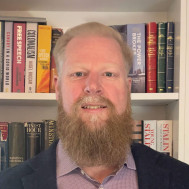
Why are you interested in standing?
The Internet has had the most profound impact on public engagement since the printing press, yet even after decades of widespread use, we are still navigating the balance between online liberty and the need to prevent true harm. I believe I offer valuable insights to this ongoing challenge. As a lawyer with over twenty years’ experience and a Master’s degree in law, specialising in civil liberties and freedom of speech, I have spent my career defending individuals against both state overreach and their own foolishness, championing their right to be free from unwarranted state intrusion. Since my university days, I have maintained a strong interest in the intersection of computers, the internet, and the law. I have dealt with this in my legal practice and in my role as a council member of the New Zealand Free Speech Union. As we grapple with the challenge of addressing online harms while resisting unnecessary restrictions on freedom, it is vital that the InternetNZ board includes members with expertise in these areas. As a consumer of InternetNZ’s services and the owner of multiple domains, I am personally invested in ensuring robust, fair governance for all users. I am deeply interested in cybersecurity, particularly the growing threat of transnational crime and its impact on New Zealand. National domain registries must balance regulatory compliance with user privacy, navigate complex legal frameworks, and monitor online activity without infringing on individual rights — all while maintaining public trust. I am eager to contribute my legal expertise, commitment to civil liberties, and understanding of the law to InternetNZ’s mission in order to foster a secure, open internet for all New Zealanders.
What skills do you bring to the role?
As a lawyer with over 20 years’ experience, I am skilled at analysing complex issues and navigating regulatory frameworks. I have practised at the independent Bar in New Zealand and worked as a prosecuting lawyer for local government, both here and overseas. My legal background provides me with strong dispute-resolution and negotiation skills, essential for managing stakeholder relationships and resolving conflicts. My governance experience includes five years previously on the Board of Community Law Canterbury, as well as my current role as a council member of the New Zealand Free Speech Union. This has given me hands-on experience in strategic oversight, risk management, and organisational leadership. I have also served on numerous smaller, local committees over the years. I would bring to the board a lawyer’s perspective on the key issues for InternetNZ: registry governance, the .nz policy framework, and how to protect an open internet without either overregulating it or leaving users exposed to unnecessary risks. I am confident that my experience and perspective would add real value to the InternetNZ board.
Short video
David Chisholm

Hi I'm Dave Chisholm from Palmerston North, 61 and keen technologist in "the provinces" for something like 55 years - I have always wanted to know how things work, and attempt to make them better :-)
I am (admittedly at the last minute) offering my candidacy for this Board for two reasons:
-
I am well qualified and have the energy and time available to do the role justice, respecting the trust given in selflessly furthering the aims and objectives of InternetNZ as outlined in Strategy 2026-2031 and other guiding documents. I believe my skills will add useful perspectives to a Board of already well qualified people.
-
The elephant in the room, why now? InternetNZ and its objectives are under an existential threat, from bad actors with no true interest in the inclusive principles and objectives of the society, but trying to submerging it in an extremely ugly culture war. This must be opposed by candidates with honesty and integrity.
I have decades of experience in (small) organisational governance and finance, small business, consumer IT support, volunteer engagement, public policy formation, politics, social media moderation, amateur theatre, charitable grant funding, and a life of service to domestic cats.
I have neurodiverse ADHD brain wiring which makes me an effective analytical thinker, strategist, and problem solver. I'm financially and technically literate, a good communicator, and an empathetic listener, comfortable talking with people in deeply personal situations, or in corporate boardrooms.
I am strongly supportive of diversity and inclusiveness, Te Ao Maori and Te Tiriti, our rainbow community, our disabled community, and lessening the digital divide.
I stand up and fight back when faced with charlatans, bullies and manipulators.
I am the sole employee in my own consumer IT support company in Palmerston North since 1996, but I have helped people understand computers and the internet since1988 dialup! BBSdays, founding committee member of a Macintosh Users Group (and wound it up 30 years later).
Before, I gained a B.E. and worked for NZPO/Telecom NZ as a Network Development Planning Engineer (and early user of dialup BBSs, eWorld, Xtra).
I help moderate an active private Facebook NZ politics group of 13,000 members, was a Census Enumerator, wrote submissions to Select Committees, campaigned for politicians and stood (unsuccessfully) as a Labour candidate for Council.
I was Chair of Finance for a multi-congregation Regional Methodist Church, Funding Officer for a provincial Repertory Society, and executor of my late parents' wills.
I am an amateur stage actor and singer, semi pro film and TV extra, and I talk a lot... it comes with the brain wiring and it's one of the ways I tease out solutions.
I'll ask awkward questions and spot the flaws in almost any proposal, and bring up alternatives that might have been overlooked.
I’m down to earth and can work solo or collaboratively. I don’t wear a suit and I can't solve all the world's problems, but I'll try my damnedest!
Welcome to my frenetic Neurodiverse world!
Vote for David!
Short video
Annette Culpan
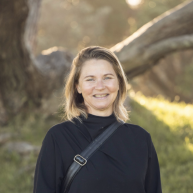
Annette has over 25 years’ experience across corporate, philanthropy, and the non-profit sectors. Annette has served three terms on the Board of Philanthropy New Zealand, six years as a trustee of the Gift Trust, and has more than a decade’s experience in governance for the not-for-profit sector. She served on the Design Working Group for the Social Enterprise World Forum in 2017.
In her career, Annette has collaborated with numerous philanthropic foundations across Aotearoa, worked for Vodafone New Zealand for more than fifteen years in a breadth of roles - including leading their corporate foundation for more than eight years and through a period of innovation.
Annette brings a valuable combination of strategic governance capability, analytical thinking, community engagement, and experience spanning philanthropy and business. She has knowledge of, respect and reverence for Te Ao Māori, a track record of building inclusive, representative governance and an interest in responsible investing.
“I care deeply about social cohesion, safe and inclusive online spaces and I agree wholeheartedly with Internet New Zealand's mission of helping deliver an internet that benefits all of Aotearoa."
Annette says Internet NZ has a unique and important role - providing critical infrastructure, influencing policy, promoting digital inclusion, safety and strengthening democracy.
Annette believes in the power of innovation and community to drive meaningful social change and dreams of an Aotearoa New Zealand grounded in partnership - where all of us can flourish.
Short video
Bianca Grizhar
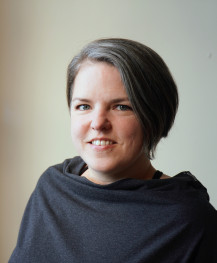
I am running for the board of InternetNZ to use my governance experience and technical expertise to stop the right wing takeover of InternetNZ and indeed the internet in Aotearoa.
I believe the digital path we forge should be an independent one driven by our values, deeply rooted in Te Tiriti and catering to the needs of people instead of driving profits for overseas corporations.
We should be very concerned by the influence Big Tech companies, their sociopathic billionaire owners and lobbyists have on New Zealand’s internet and infrastructure. What if our emergency mobile networks are shut down because New Zealand citizens are protesting US foreign policy? Could our public sector infrastructure be switched off if a New Zealand judge rules against US interests, as has already happened in Europe? Could we be locked out from accessing our own data in NZ based data centres if we publicly disagree with Big Tech’s complicity in genocide? At a time that our own government is falling over backwards to give our data and rights to declared US military organisations like Palantir, and basing our digital “public” infrastructure on Microsoft and Salesforce, InternetNZ has a critical role to play to fight for a truly independent, free and equitable internet for Aotearoa.
I have 25 years of experience working on the internet, as a software developer, product manager, UX designer, academic researcher (in AI and machine learning) and in sales and senior management roles. I have experience working in a wide range of political climates, from German universities committed to open source software, to an increasingly authoritarian regime in China, to an organisation promoting collaboration through technology in totalitarian North Korea.
I believe that the internet must belong to its community of users, not subjected to the control of undemocratic governments or self-interested corporations.
I have governance experience from committee roles in the Green Party, the advisory board of libre software company Magnificent and the board of directors of St Gerard’s Limited. My Greens roles have enabled me to contribute to digital policy development as well as technology operations, and provided the privilege to learn what being based in Te Tiriti and Te Ao Māori means. I have been an early adopter and promoter of internet technology, I have been a victim of toxic platforms, and I became an activist when these technologies were used against people.
I ran for the InternetNZ board last year and since then I have personally attended every board meeting to learn how the organisation works in practice, and how the current board members think about internet issues, in particular those departing board members whose expertise and experience will be hard to replace.
In this election, I am asking you to vote strategically to make sure we are not losing more board seats to people who do not believe in the values and mission of InternetNZ as an independent community organisation. I will fight to prevent the destruction of this incredibly important organisation, and be a hard-working contributor to InternetNZ’s long term future.
Short video
Jillaine Heather
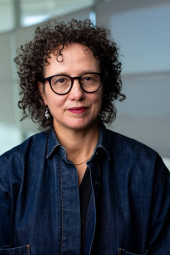
1. Why are you interested in being a Board member for InternetNZ?
The internet is where New Zealanders speak, interact, work, learn, organise and do business. InternetNZ sits at the centre of that as steward of the .nz domain, and the decisions its Board makes are important to everyone who is online in this country.
I am standing because internet policy is at a turning point. Governments here and overseas are moving on online safety regulation, age verification, social media restrictions and digital identity, and the choices made over the next few years will decide how open and accessible the internet stays. I work on these questions every day as Chief Executive of the Free Speech Union, and I want to put that experience to work for InternetNZ's core mission: an internet that is open, secure and accessible for all.
I also believe boards do their best work when they stick to governance. I would come to the board table ready to serve the whole membership, respect the line between Board and management, and keep the focus on InternetNZ's kaupapa.
2. What skills and experience will you bring to the role?
I bring a mix of governance, legal and executive experience.
I have served on the Free Speech Union's board since December 2023 and am now also its Chief Executive, responsible for strategy, budget, staffing and risk. Working on both sides of the table has taught me where governance ends and management begins, and how a board holds an executive to account without doing their job for them. I am also a 2025 mentee in the Institute of Directors' Tautua Pasifika mentoring programme, where I had to opportunity to build my governance practice and knowledge under the guidance of experienced directors.
My professional foundation is technology law. I spent six years as a commercial technology lawyer in New Zealand, London and New York, at Simpson Grierson, DLA Piper and in-house at Sapient. I recently completed a Master of Laws, with papers in comparative human rights, freedom of speech as a constitutional right, human rights litigation, South Pacific legal critical issues, and the shaping the law in tech. That combination of technical legal expertise, and human rights law sits squarely on the issues InternetNZ deals with.
Public policy is my daily work. I lead submissions to select committees and government agencies addressing online communication access and safety, and content regulation and law.
I also bring people and leadership experience. I was Head of Human Resources for the FIFA Women's World Cup 2023 across Australia and New Zealand, onboarding more than 700 staff from over 70 countries, and before that I ran an executive search firm focused on financial services in New York.
Above all, I bring a clear perspective: the internet works best when it is open, and New Zealanders should be able to speak, read and participate online without unnecessary gatekeeping.
Short video
Keoni Mahelona
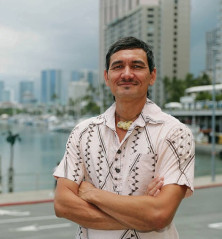
Keoni Mahelona brings a fresh, multicultural perspective to Internet New Zealand with a strong grounding in values. Born and raised in Hawaii, he grew up in a large, hard-working, entrepreneurial family whose patriarch was a Protestant Minister. Keoni holds degrees in Engineering and Entrepreneurship, and arrived in New Zealand as a Fulbright Scholar to complete an MSc in Physics. He sees how technologies can improve the lives of all peoples by enabling free markets to serve communities as efficiently as possible. But he also sees how a lack of values has allowed some technologies to cause harm. When elected onto the Board, he will use his experience working with and leading nonprofits and walking in many worlds to bring all members together for a common good. Leadership is about negotiating and finding the optimum paths forward. His ability to see issues from multiple perspectives will serve as the glue to enable Internet NZ to enact the changes we need for all New Zealanders.
Jan Rivers
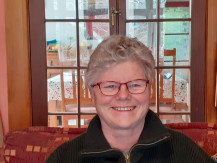
Why are you interested in being a Board member for InternetNZ?
Internet New Zealand’s status as a community-controlled internet regulator internationally and an incorporated society that has a guaranteed income stream are both unusual. These factors make it a taonga for New Zealand. I see the role of Internet New Zealand as three-fold. Modelling good internet regulation in an increasingly difficult international context, acting as an advocate for an open internet, an open society and diversity including viewpoint diversity and using its income stream wisely in support of removing blockages to social cohesion by providing opportunities for informed commentary and awareness raising on internet, connectivity and related technology issues for New Zealanders. I am interested in seeing governments, including In New Zealand regulate internet providers away from the algorithmic tools that drive extremism, addiction and harm and towards ends that support good citizenship. Oligarch run organisations need to work within social licence. In contrast I believe Internet New Zealand’s involvement in assessing some views as misinformation / disinformation should be anathema for a regulator. Internet NZ and its members deserve to be part of, and to facilitate, a well-informed forum for grappling with these issues. The government leadership in technology has recently passed to the Public Service Commission and this represents a strategic opportunity for Internet NZ to be part of a tri-partite discussion between business, the third sector and the executive.
What skills and experience would you bring to the role?
I am a former public servant, and a longstanding member of Internet New Zealand. With 40 years of working experience, I can take the long view. I have worked across government in the areas of ICT policy systems and business analysis, IT project management, library and knowledge management, and was the Local Government NZ advisor on ICT and web policy at a crucial time. I have had a longstanding involvement in the Open Government Partnership and was part of the small group that advocated a public inventory of government algorithms. I attended several Internet New Zealand’s early conferences and thought them to be models of effective community building and strategy making in the sector. For a short time, I was a Trustee of Scoop’s Charitable Trust. I’ve worked closely with the directors of Genspect to set its strategic direction and prior to that I was on the board of the former St Andrew’s Trust for the Study of Religion and Society which held a number of conferences on issues related to the public good and ethics. I assisted in its orderly closedown, archiving the history and disbursement of the assets. I am a “sex-realist” feminist and advocate for not medicating children with drugs that affect their future. As a result I understand, possibly more than most, the importance of freedom of thought and speech, openness to problem solving approaches across the deep divides in New Zealand society and the respectful, listening approach that Internet NZ advocates.
Short video
Daniel Spector
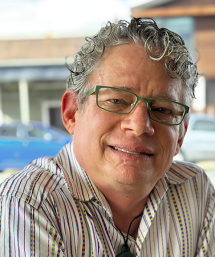
Why are you interested in being a Board member for InternetNZ?
To do what I can to support a free and uncapturable Internet for New Zealand.
For 17 years I have been an active member of InternetNZ, and a Board member for the past two. In 2024 I stood for the Board because I felt engagement with members and with government needed strengthening. Two years on the Board have shown me where to act and how.
The internet is critical infrastructure for Aotearoa New Zealand. What InternetNZ decides about the .nz domain, security, and our public policy voice reaches every person and business in this country. The Board has adopted the 2026 to 2031 strategy, and delivering it needs directors who already know the terrain.
My first term was learning the systems: a constitution review carried to member approval, Audit and Risk Committee service, hard conversations about accountability. The next three years are where that investment pays forward: delivering the DNS Abuse Strategy, strengthening InternetNZ's public policy voice, and an internet that includes every New Zealander. I am not starting from scratch. I am starting from ready.
What skills and experience will you bring to the role?
Governance. Two years on the InternetNZ Board and its Audit and Risk Committee, after two decades on non-profit boards. That period covered the constitution review, the approval in principle of the DNS Abuse Strategy, and the lifting of our security posture. I pushed for goals that hold management to account. Boards work when directors ask hard questions. I want to know what a decision does to actual people.
Technical literacy. I have spent 25 years working on the internet, not near it. I understand DNS, registry operations, domain abuse, and the multistakeholder system that keeps the internet open and global. InternetNZ co-founded the Technical Community Coalition for Multistakeholderism (TCCM), which works inside the ICANN and United Nations systems to defend that model; on the Board I have overseen our secretariat role through a pivotal period.
Public policy. I publish a weekly LinkedIn series on governance at the intersection of AI, digital sovereignty, and procurement, drawing national media attention; one piece reached 18,000 readers in 72 hours. In April I filed a submission identifying four gaps in DPMC's proposed cyber security regime for critical infrastructure, bringing the management of .nz into scope. InternetNZ needs directors who can carry members' interests into the rooms where policy is made, including the Beehive.
Commercial experience. I carried P&L responsibility at Catalyst IT as it scaled significantly in revenue and headcount across six global offices. I was Chief Revenue Officer at BlockIdentity (August 2024 to April 2026), co-founded NZRise, and advise tech founders through CxO Success. I know how organisations grow, and how they fail.
Community. A 17-year member of this Society and dual citizen, I have long advocated for disability communities and closing the digital divide. I support InternetNZ's commitment to Te Tiriti o Waitangi. An open, secure internet that serves New Zealand's interests is worth defending. I have done this work since 2009. I am asking for three more years.