Opening doors to STEMM for Wairarapa rangatahi
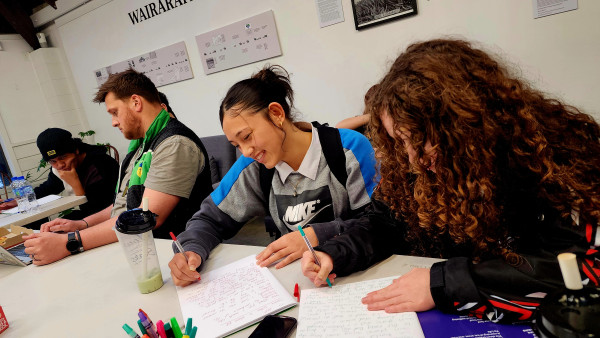
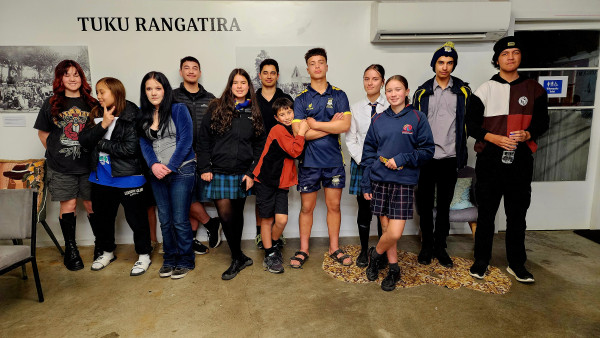
On a Thursday afternoon in the Wairarapa, more than a dozen rangatahi Māori gather after school at Hau Kāinga in Masterton.
For two hours each week during Terms 3 and 4, the space becomes somewhere to focus, ask questions, and imagine futures that once felt distant — in universities, health services, and technology spaces.
This is Puāwai Pūrau STEMM Academy: a community-led, voluntary programme supporting Wairarapa rangatahi Māori to explore STEMM — science, technology, engineering, mathematics and mātauranga Māori — beyond the classroom. Its foundations are rooted in culture, connection, and place.
The young people choose to be here. They arrive after long school days, seeking support with maths and science internal assessments and exams, and curious about where those skills might take them.
A kaupapa born from whānau needs
Puāwai Pūrau STEMM Academy was launched in 2022 by Waireka Collings, a Wairarapa-based Māori leader, whānau advocate, and māmā. At the time, Waireka was grappling with a challenge familiar to many parents.
“I knew how important science and maths were,” she says. “But I also knew I didn’t have the confidence or the knowledge to support my own kids in that space.”
That realisation hit home while attending a STEM event that laid bare inequities in the education system — including how Māori students are often streamed out of opportunities before they’ve had a fair chance to discover their strengths.
“I started to panic,” she recalls. “I thought, holy heck — if I struggled in this space, how is my son going to navigate it?”
When it became clear that an existing national programme wouldn’t reach Masterton anytime soon, Waireka made a call that would change the trajectory of dozens of local rangatahi.
“I remember saying, if you don’t come here, we’ll set up our own one. Even when I said it, I’m not sure I fully believed it — but it lit the fire.”
She began by reaching out to local schools, asking a simple question: What could this look like here? What emerged was a kaupapa designed around what was possible — homework and assessment support led by teachers, strong relationships, and a learning environment where rangatahi Māori could feel safe, capable, and supported.
“For our rangatahi, it’s an after-school academic space that isn’t scary, where people know you, and where learning is simply what you’re here to do.”
Alongside academic learning, the academy helps rangatahi develop broader life skills, including meal planning, job applications, budget management, problem-solving, collaboration, and driver's license preparation.
Making future pathways feel possible
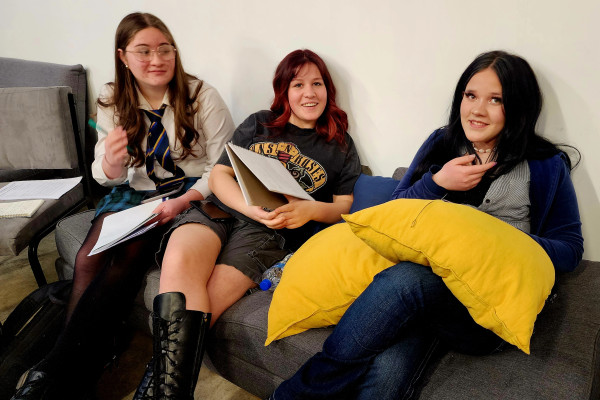
A defining feature of Puāwai Pūrau STEMM Academy is its focus on real-world exposure. Rangatahi are introduced to tertiary study and STEMM career options, and often have the opportunity to experience them firsthand.
Haerenga have included visits to tertiary, health, and science-based learning environments, helping demystify spaces that can otherwise feel intimidating or out of reach.
For many ākonga [students], university, particularly, had felt like a “far-off pipe dream”, Collings says.
“Seeing campuses, meeting staff and students, and recognising familiar faces builds whanaungatanga and helps our rangatahi begin to picture themselves belonging there.”
Learning that adapts and responds
In 2025, one of the most powerful moments came during a visit to the Rotorua-based Digital Natives Academy, a private training establishment in digital and creative tech.
“We walked through the doors, and the kids’ mouths were wide open — like, what the heck is this? People get to come here every day?”
That visit marked a deliberate shift. While earlier years focused heavily on university and health pathways, Puāwai Pūrau is increasingly responding to rangatahi interest in technology and alternative learning options.
They also introduce young people to role models. Guest speakers have included local nurses and midwives, marine biologists, engineers, innovators, and kaupapa Māori practitioners working at the intersection of culture, science, and technology.
“By hearing these role model stories first-hand, our rangatahi can see people who look like them, come from their communities, and are forging careers in fields that once felt out of reach,” Waireka says. “This helps make those futures feel real and achievable.”
Those moments of exposure are already translating into tangible outcomes. Former students are now studying medicine in Ōtākou [Otago] and pursuing science-based degrees elsewhere.
One moment still stands out. During a hands-on marine learning experience, a rangatahi encountered sea life up close for the first time.
“The joy on her face was incredible,” says Waireka. “In that moment, something shifted. She’s now studying marine biology.”
Why sustained support matters
Puāwai Pūrau runs on commitment, goodwill, and volunteer effort. Waireka and co-founder Trudy Sears from REAP Wairarapa contribute countless hours of unpaid mahi. Sustained funding support helps make that work possible.
InternetNZ first provided funding in 2024, followed by a two-year commitment through 2025 and 2026. That certainty has eased pressure and allowed the kaupapa to focus on what matters most: rangatahi.
“It takes away one element of the grind,” says Waireka. “That means more time for the mahi instead of chasing the next grant.”
__________
InternetNZ | Ipurangi Aotearoa reinvests money made from the sale of .nz domains into community initiatives which support digital accessibility and equity and contribute toward our vision of an Internet for everyone.
You can read more about our funding and grants on this page.